
The interest isn't limited to first-time entrepreneurs. Real estate investors, convenience-store owners looking to add a revenue stream, existing operators upgrading old bays, and fleet facilities are all evaluating this space heading into 2026.
Here's the reality check: an automatic car wash is a capital-intensive operating business, not a passive-income machine. This guide walks through the models, true costs, site selection factors, equipment choices, compliance requirements, and step-by-step launch planning you need before committing money to land or machinery.
Key Takeaways
- Budget for land, construction, utilities, water, permits, technology, and working capital—not equipment alone.
- Pick among three core formats: in-bay automatic, express tunnel, or hybrid.
- Validate every site for traffic quality, access, zoning, utilities, and local willingness to pay.
- Match equipment to demand, vehicle mix, and the maintenance load you can support.
- Use conservative projections and stabilize one site before opening a second.
What Is an Automatic Car Wash Business?
An automatic car wash business is a commercial facility where equipment handles most or all of the washing process, with limited employee or customer involvement. The equipment manages rinsing, chemical application, drying, and payment, sometimes alongside vacuums or add-on detailing services.
The Three Main Formats
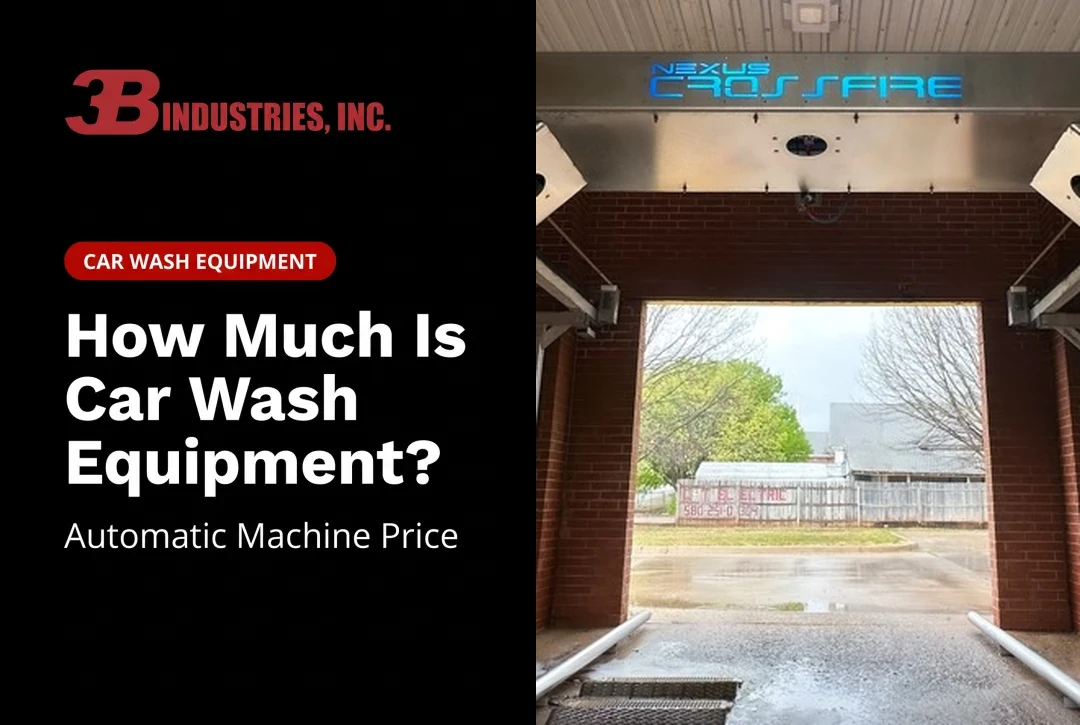
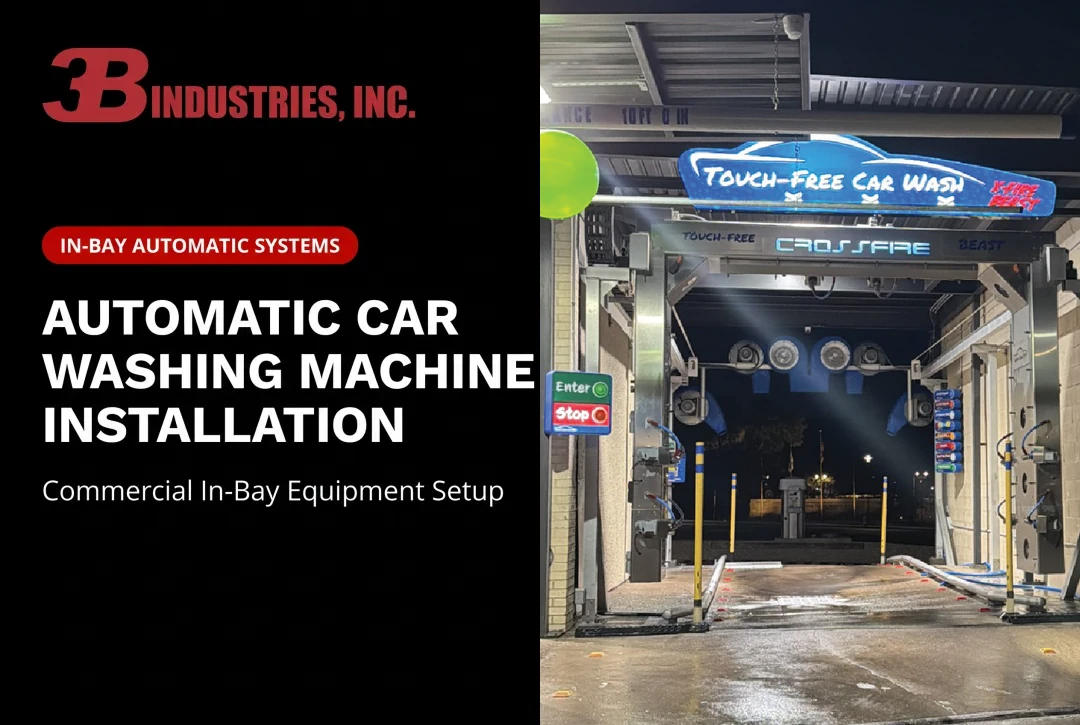
In-bay automatic (IBA) systems keep the vehicle stationary while equipment moves around it. 3B Industries' Crossfire, for example, is a touchless in-bay system that washes both sides of the vehicle at once with patented oscillating spray technology. It has no arms or wands that can strike a vehicle.
Express tunnel systems move vehicles through a sequence of wash and drying stations on a conveyor. These typically run 80-120 feet long and demand a larger footprint than an IBA setup [11].
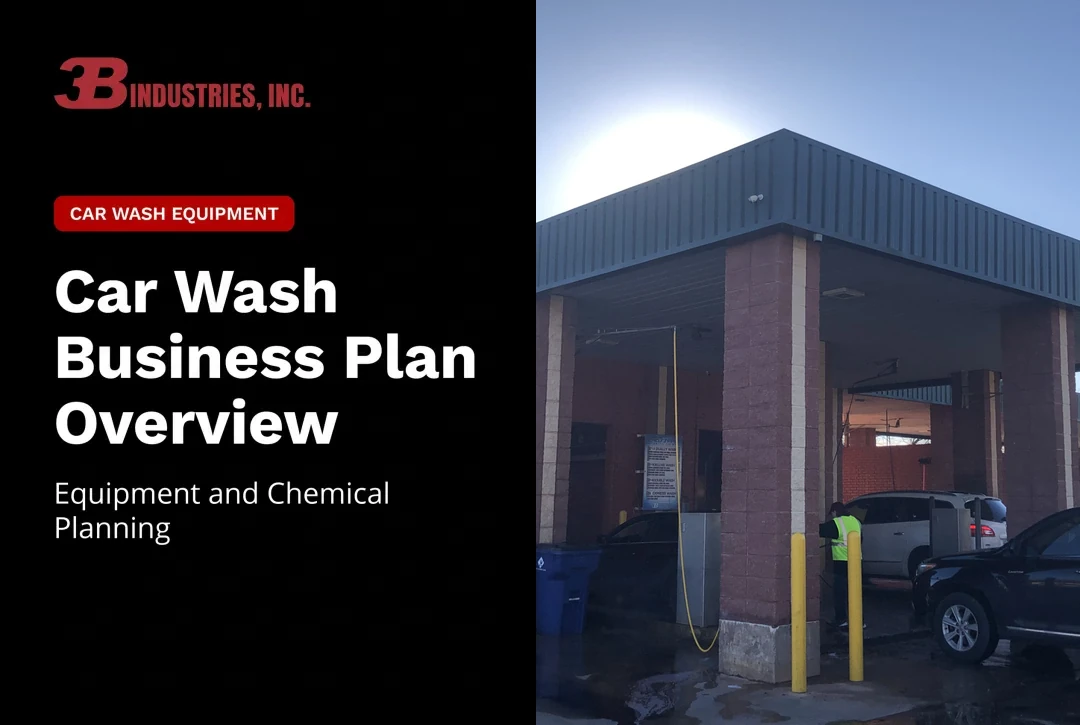
Hybrid facilities combine automatic washing with self-service bays, vacuums, or membership programs. Brown's Car Wash in Comanche, Oklahoma, is a working example. It pairs a Crossfire in-bay automatic with three self-service bays, plus vacuums and a scent machine, so customers get a choice without doubling the footprint.

Ownership structures vary too:
- Independent single-site operations
- Franchise locations
- Add-on washes at existing gas stations
- Facilities built for commercial fleets
What to Know Before You Start (And When It Makes Sense)
Beginners often fixate on the wash machine itself and underestimate everything else: real estate, construction, permitting, maintenance, and daily oversight. Set realistic expectations for what the first 12-18 months actually demand before you commit capital.
Early-stage work spans several tracks at once:
- Site research and lender conversations
- Permitting and architectural planning
- Equipment selection and vendor coordination
- Hiring and pre-opening marketing
None of these run in isolation. Delays in one area (say, a zoning hearing) push back everything downstream.
Where Automation Helps, and Where It Doesn't
Technology genuinely reduces labor needs in specific areas:
- Payment processing and wash activation
- Remote equipment alerts and reporting
- Customer communication through apps or kiosks
But people still handle the parts that keep a site running:
- Daily inspections and cleaning
- Chemical replenishment
- Preventive maintenance and repairs
- Customer support and safety checks
3B Industries' Genesis operating platform, for instance, lets operators monitor Crossfire equipment remotely, but someone still needs to physically restock chemicals and respond when a sensor flags a problem.
When the Opportunity Makes Sense
Weigh the opportunity against your capital, risk tolerance, and local market evidence rather than treating it as a guarantee. A few conditions tend to support the decision:
- Recurring demand exists locally. Cars get dirty year-round from weather, road salt, and daily driving, which sustains repeat visits regardless of season.
- The industry outlook is stable, not explosive. The International Carwash Association's Q4 2025 Pulse report describes modest single-digit growth as the realistic 2026 baseline, with subscription growth flattening and competition intensifying.
- You can differentiate. Whether through speed, membership pricing, water reclaim, or fleet contracts, a me-too wash in a saturated corridor struggles.
- You're building toward a transferable asset. A well-located, compliant site with maintained equipment and a loyal membership base has resale value beyond its monthly cash flow.
Quick cash flow shouldn't be the goal here. The businesses that last are built on reliable equipment, documented maintenance, and repeat customers, not a fast opening.
Early Decisions That Matter When Starting an Automatic Car Wash Business
Most early problems trace back to one of three mistakes: underestimating project complexity, picking a site before validating demand, or buying equipment before defining the business model.
Getting the Real Cost Picture
Equipment pricing is only one line item. A complete cost checklist includes:
- Land or lease costs and due diligence
- Design, civil engineering, and construction
- Drainage, plumbing, and electrical work
- Equipment, installation, and payment technology
- Water treatment or reclaim systems
- Signage, permits, and insurance
- Chemicals, payroll, and marketing
- Working capital for the ramp-up period
For context on scale, an industry comparison found in-bay automatic equipment costs were often under $200,000, while a full conveyorized tunnel package ran $1.5 million to $2 million. Treat these as directional benchmarks, not current quotes; get vendor-specific numbers for your project.

Build three break-even scenarios, not one: conservative, expected, and downside. Each should model:
- Cars washed per day and average ticket
- Membership revenue
- Fixed and variable costs
- Debt service and maintenance reserves
Don't invent a payback period before you have local traffic and pricing data.
Competitive Pressure You Can't Ignore
Visit every nearby wash, whether automatic, tunnel, self-service, or mobile. Note their pricing, membership structure, hours, and reviews. A new entrant that undercuts prices without checking whether that price covers maintenance and debt service usually doesn't survive year two.
Compliance and Founder Dependency
Zoning, water discharge permits, stormwater controls, ADA accessibility, and fire and electrical codes all require local professional review before you sign a lease.
Decide early who manages vendor relationships, complaints, and maintenance escalation when you're not on-site. That choice shapes your staffing plan more than almost anything else.
How to Start an Automatic Car Wash Business – Step by Step
These stages move roughly from validation to stable operations, though financing, permitting, and construction timelines often overlap. Resist the urge to buy equipment or sign a lease before you've validated demand and pricing.
Step 1: Identify the Customer, Market, and Opportunity
Define your customer mix first: commuters, families, subscription members, dealerships or fleets. Then analyze traffic quality, not just volume. The more traffic passing a viable location with roads at 45 mph or lower and roughly 200 yards of visibility in both directions, the better. This will also help determine the number of automatic car wash systems that will be needed to adequately service the area.
Map every competitor's format, pricing, and reviews. One frequent mistake: treating high vehicle counts as demand, even when cars can't safely enter, use, and exit the site.
Step 2: Choose the Business Model and Validate Pricing
Compare in-bay automatic, express tunnel, hybrid, and fleet-focused models against your site size and capital. Build wash packages with basic and premium tiers, add-on vacuums, and membership options. Test pricing through real competitor comparisons and customer conversations, not just online interest.
Avoid launching on a teaser price that can't cover chemicals, maintenance, and debt after the promotion ends.
Step 3: Build the Business Plan and Financial Model
Separate one-time costs (land, construction, equipment, signage) from recurring costs (utilities, chemicals, payroll, insurance, maintenance reserves). Add sensitivity scenarios for slower volume, construction overruns, and aggressive competitor pricing.
Research financing routes such as:
- SBA 7(a) loans, which can finance real estate, equipment, and working capital up to $5 million, with guarantees up to 85% on loans of $150,000 or less [14]
- SBA 504 loans for long-term fixed-rate financing on major fixed assets
- Equipment financing, owner capital, or strategic investors
Don't treat the equipment quote as the full capital requirement—land, utilities, and working capital usually dwarf it.
Step 4: Secure the Site and Complete Compliance Due Diligence
Confirm zoning and permitted use in writing before signing anything. Investigate water supply, wastewater discharge requirements, and stormwater controls; the EPA requires permits for any pollutant discharge into navigable waters under the Clean Water Act [6]. Evaluate entrance and exit design, queue capacity, and drainage.
3B Industries offers site assessment assistance covering location evaluation, layout planning, and utility requirements, which shortens this work for first-time owners.
Step 5: Select Equipment, Systems, and Technology
Match equipment to your validated demand and vehicle mix. Compare touchless, friction, and specialty large-vehicle systems. For fleet or oversized-vehicle service, clearance matters:
| System | Bridge Clearance |
|---|---|
| Crossfire | 8 ft 7 in |
| Crossfire+ / Beast | 10 ft 8 in |
| Crossfire XL | 12 ft 9 in |
| Crossfire Gauntlet | 14 ft 10 in |
The Crossfire XL is built for buses, delivery vans, and municipal fleets, so it can win commercial and government contracts many standard IBA systems can't service.
Water use is another decision factor. EPA WaterSense data shows in-bay systems can cut freshwater use from 60 gallons per vehicle down to 8 gallons with proper reclaim systems [26].

Specify the full system, not just the primary machine: pumps, dryers, chemical delivery, payment technology, and remote monitoring. Every Crossfire unit is CNC fabricated and manufactured in-house in the USA, which supports faster parts availability and warranty response over the life of the machine.
The trap: picking the cheapest machine without comparing uptime, water use, and long-term support.
Step 6: Design, Construct, Install, and Commission
Coordinate civil engineering, wash-bay layout, drainage, and employee safety with qualified contractors. Test every operating sequence before opening day, including payment, high-pressure systems, dryers, and emergency stops.
Construction finish is not the same as operational readiness—run real throughput and customer-flow tests before you open.
Step 7: Plan Staffing, Maintenance, and Support
Decide who handles inspections, chemical checks, and payment reconciliation, whether that's you, a site manager, or a technician on call. Build contingency plans for equipment failure, severe weather, and payment outages.
3B Industries' car wash division includes in-house and field technicians who support owners after installation, which matters most when a system goes down on a Saturday morning.
Unattended does not mean unmanaged—plan daily checks even when no staff stand on site.
Step 8: Launch, Market, Measure, and Stabilize
Plan pre-opening marketing across local search, signage, and membership campaigns. Track wash volume, membership retention, downtime, and customer acquisition cost, not just gross sales.
Consider whether a membership program makes sense for your location and customer base. While unlimited-wash memberships can provide recurring revenue and encourage repeat visits in some markets, they are not a good fit for every operation. Evaluate local customer demand, pricing, and profitability before introducing a membership model. In some locations, focusing on individual wash sales may be the more effective approach.
Stabilize this first site's cash flow and maintenance before you add a second location.

Conclusion
Starting an automatic car wash business requires more than purchasing automated equipment and opening the doors. Success depends on validating demand, choosing the right model, budgeting for the entire project, and building operations that hold up over time.
Location, compliance, equipment support, and conservative financial planning matter more than how fast you can launch. Before committing capital, compare site-specific evidence, supplier capabilities like 3B Industries' Crossfire systems and site assessment support, and a genuine downside scenario, not just the best-case projection.
Frequently Asked Questions
How much does it cost to set up an automatic car wash?
Costs vary widely based on format, land, construction, and water systems, with in-bay setups generally far less capital-intensive than express tunnels. Get current vendor quotes; equipment-only pricing rarely covers your full budget.
What costs should be included in an automatic car wash business plan?
Include land or lease costs, construction, equipment, installation, utilities, water and wastewater systems, permits, insurance, labor, chemicals, maintenance, marketing, and opening-period reserves.
Is an automatic car wash profitable in 2026?
Profitability depends on location, pricing, membership conversion, throughput, and operating costs, not industry averages. Build conservative, site-specific projections instead of banking on a universal profit figure.
What is the best location for an automatic car wash?
Look for qualified vehicle traffic (not just volume), clear visibility, easy entry and exit, nearby retail, and zoning that permits your intended use. Drainage and utility access matter just as much as street frontage.
How do I choose automatic car wash equipment?
Match equipment to your projected volume, vehicle mix, and site constraints, then compare suppliers on uptime, water consumption, and maintenance support rather than sticker price alone.
How long does it take to open an automatic car wash business?
Timelines depend on site control, zoning approval, construction, and equipment lead times. No single national average fits every project, so confirm local permitting schedules and supplier delivery windows before you set an opening date.