
Operators juggle real concerns here: freshwater consumption, contaminated runoff, chemical handling, vehicle finish protection, operating costs, and compliance. Home washing sends detergent-rich water straight to storm drains, carrying pollutants like metals, nutrients, and hydrocarbons into local waterways, according to the EPA's stormwater best management practices for vehicle washing. Commercial facilities generally handle this differently.
This guide breaks down what actually qualifies as eco-friendly, how reclaim systems function, how to evaluate equipment, and where a manufacturer like 3B Industries fits into the planning process.
Key Takeaways
- Eco-friendly systems cover the full wash cycle, from water intake and treatment through reuse and discharge
- Water recycling cuts freshwater demand—verify treatment quality and local rules before trusting the savings
- Choose equipment based on vehicle mix, wash volume, site infrastructure, staffing, and lifecycle cost
- Back environmental claims with documentation, not vague “green” or “water-saving” labels
What Makes a Car Wash System Eco-Friendly?
A system earns the "eco-friendly" label through measurable performance, not marketing language. That means resource efficiency, pollution prevention, responsible chemical selection, and regulatory compliance all working together.
Why Location Matters for Runoff
Washing a car in a driveway lets oil, grease, dirt, metals, and cleaning agents flow into storm drains untreated. Commercial facilities typically provide more controlled collection and wastewater handling, though requirements vary by jurisdiction. Operators should confirm applicable rules with their state and local authorities before assuming compliance.
Four sustainability dimensions define a genuinely eco-friendly setup:
- Water efficiency — efficient spray patterns, controlled flow rates, reclaim systems, and reuse of suitable water at appropriate wash stages
- Chemical responsibility — biodegradable or lower-impact formulations where appropriate, accurate dilution, and safe storage and disposal
- Wastewater management — collection, solids separation, filtration, treatment, reuse, and permitted discharge
- Equipment and energy efficiency — durable components, efficient pumps and motors, and maintenance that prevents leaks and unnecessary consumption
No single feature proves environmental superiority on its own. A wash with a reclaim tank but poor filtration isn't automatically better than one without reclaim. Compare documented water use, wastewater practices, chemical ingredients, and equipment specifications across the whole system before drawing conclusions.
How Do Eco-Friendly Car Wash Systems Work?
Water moves through several stages in a well-designed system: fresh-water supply, wash application, drainage, collection, pretreatment, filtration, treatment, storage, reuse, and final discharge.

Water-Reclamation Components
Each piece plays a specific role:
- Collection pits or drains capture wash water and route it away from uncontrolled stormwater pathways
- Settling tanks, screens, and oil-water separators remove solids, oils, and suspended contaminants
- Filtration and treatment stages prepare reclaimed water for approved reuse while managing odor and mineral buildup
- Storage tanks hold treated water until it's needed for the next wash cycle
Not every system uses all three pretreatment options, so match components to your equipment.
Reclaimed water isn't used the same way at every stage. Higher-quality fresh or treated water is often reserved for final rinsing, while reclaimed water handles earlier stages like rocker-panel and undercarriage washing.
Equipment Features That Support Efficiency
3B Industries' Genesis Multi-Platform Operating System illustrates how programmable controls support resource efficiency in practice. It supports up to 10 wash packages, 20 wash cycles per package, and eight chemical applications, with variable orbital speeds and programmable soak times.
Before making performance claims about any equipment, request product documentation from the manufacturer. Specs vary widely between models.
Maintenance Keeps the System Honest
Inspect pumps, nozzles, reclaim tanks, filters, separators, chemical lines, and controls on a defined schedule. Skipping this step is where most "eco-friendly" systems stop delivering the savings they promise. A worn nozzle or a leaking chemical line can undo months of water savings without anyone noticing until the utility bill arrives.
How to Choose and Implement the Right Eco-Friendly System
Start with an honest look at your site. Skipping this step leads to expensive retrofits later.
Map these factors before you shop equipment:
- Layout, utilities, and drainage
- Local water conditions and reclaim space
- Expected traffic, vehicle dimensions, and throughput goals
- Staffing levels
Matching Format to Business Model
- In-bay automatic systems suit facilities that need consistent automated service in a limited footprint
- Self-service systems give customers control with programmable equipment and chemical options
- Tunnel or fleet systems need higher-capacity water treatment and vehicle-flow planning for trucks, buses, and other large vehicles
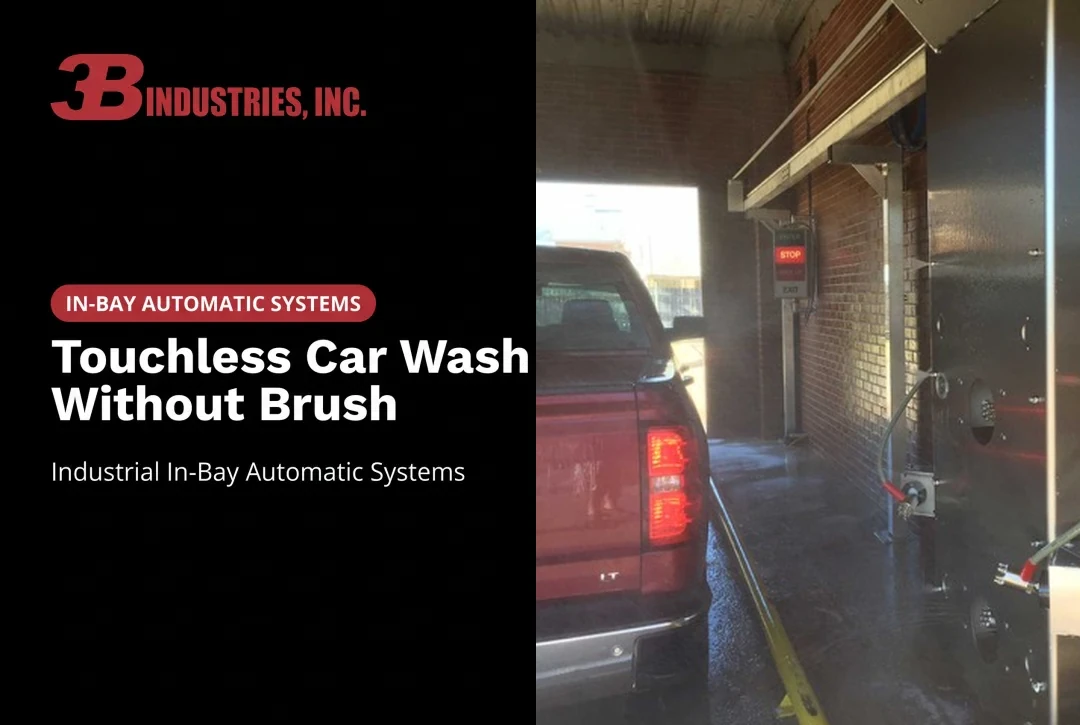
- Touchless and soft-touch setups should be compared on cleaning needs, vehicle mix, chemistry, maintenance, and verified water use; neither format is universally "greener"
For fleet or oversized-vehicle applications, clearance matters as much as chemistry. 3B Industries' CROSSFIRE line, for example, offers tiered clearances:
- CROSSFIRE+ at 10'8" for transit vans and small RVs
- CROSSFIRE XL at 12'9" for school buses and delivery fleets
- CROSSFIRE GAUNTLET at 14'10" for Class A motor homes and 18-wheelers
Fresh-Water Benchmarks Worth Knowing
EPA data is a useful reference when you compare supplier claims (figures vary by study year and region):
| Wash Format | Average Fresh Water (gallons/vehicle) |
|---|---|
| Self-service | 15.0 |
| Conveyor/tunnel | 30.0 |
| In-bay automatic | 44.8 |

Source: EPA WaterSense at Work, Vehicle Washes, 2018 study data.
Supplier-Evaluation Checklist
Ask any equipment or chemical supplier to document:
- Fresh-water use, reclaim percentage, discharge method, and testing procedures
- Safety Data Sheets, dilution instructions, and biodegradability evidence
- Equipment materials, component durability, parts availability, and warranty terms
- Installation support, operator training, and maintenance intervals
Then calculate total cost of ownership, not just sticker price. Water and sewer charges, chemicals, electricity, labor, maintenance, and downtime all factor in. A 2019 industry survey cited by Professional Carwashing & Detailing put chemicals at 13% of operating costs, maintenance at 11%, and labor at 24%. Your own numbers will vary by site.
A phased rollout keeps risk low:
- Establish a baseline and set measurable goals
- Install and commission equipment
- Train staff and monitor usage
- Revise wash programs based on actual results
3B Industries' Omni II self-service systems include water-efficiency and reclamation options; confirm current specs and integrations with the manufacturer before you commit.
What Are the Environmental and Business Benefits?
Capturing, treating, and reusing wash water cuts freshwater demand and wastewater discharge. How much you save depends on site layout, reclaim design, and how well the system is maintained — but the environmental and cost upsides stack quickly when the setup is right.
A Documented Case Study
EPA's case study on the H.E.B. car wash chain offers concrete numbers. After installing high-efficiency reverse-osmosis units and reclaim systems across 24 facilities:

- Annual water savings exceeded 24 million gallons
- Annual cost savings topped $144,000
- New reclaim systems at 13 sites averaged 30 gallons saved per car
- RO upgrades at 11 additional sites averaged 34 gallons saved per car
These are measured results from one operator, not a guarantee for every site. Still, they set a useful benchmark for what high-efficiency reclaim and RO upgrades can deliver — and water is only part of the return.
Beyond Water Savings
- Pollution control: Proper drainage and chemistry choices lower the chance oil, grease, and cleaners reach waterways
- Steadier operations: More consistent resource use, simpler monitoring, and fewer manual workarounds
- Customer trust: Documented practices and honest signage build credibility without overclaiming
The Trade-Offs
Reclaim systems also carry real costs: capital, floor space, treatment maintenance, energy, and filter replacement. A neglected system can hurt wash quality and create more corrective work than it saves.
Budget maintenance from day one. The environmental and business gains hold only when reclaim equipment stays clean, calibrated, and fully in service.
How Can Operators Verify Sustainability Claims?
Ask suppliers for the paper trail, not just the pitch:
- Equipment specifications and water-use methodology
- Reclaim-system diagrams and wastewater procedures
- Chemical documentation and maintenance schedules
- Independently supported environmental claims
Metrics Worth Tracking
Once a system is running, track these over time:
- Fresh water used per vehicle
- Reclaimed water reused per vehicle
- Wastewater discharged
- Chemical volume per vehicle
- Equipment downtime and maintenance events
- Customer complaints tied to cleaning or finish quality
Compare results against a consistent baseline. Vehicle size, soil load, weather, and equipment settings all shift the numbers, so don't panic over month-to-month noise — look at trends.
Skip the Compliance Guesswork
Review federal, state, municipal, sewer, stormwater, and chemical-storage requirements with qualified local authorities. Rules genuinely differ by state; Maryland's general discharge permit, for instance, covers specific groundwater discharges but excludes surface-water or storm-drain routes entirely.
Finally, watch the language. The FTC's Green Guides warn against broad, unqualified claims like "green" or "eco-friendly" without specific, substantiated benefits. Terms like "zero impact," "chemical-free," or "100% sustainable" should never appear on your signage unless you can define and prove them.
3B Industries' Role in Eco-Friendly Car Wash System Projects
Eco-friendly car wash projects fail most often at the seams—when reclaim hardware, chemistry, and site install are sourced apart and never fully align. 3B Industries, Inc. addresses that gap as a vertically integrated manufacturer.
The company traces to 1960, when John Brown launched a chemical-blending operation for oil-field and car wash customers. It now builds equipment, blends proprietary chemicals, fabricates custom components, and handles installation and technical support in one coordinated workflow.
Why an Integrated Supplier Simplifies Sustainability Planning
Treating equipment, chemicals, and installation as separate purchases creates compatibility gaps. An integrated supplier coordinates:
- Equipment selection matched to site layout, reclaim goals, and vehicle mix
- Chemical formulations compatible with reclaim equipment
- Fabrication and install planned around real site utilities and drainage
- Operator training plus ongoing service so systems stay in spec
3B Industries builds with stainless steel and bearing-quality components, supported by in-house and field technicians, engineers, and an on-staff formulation chemist. The F5 Side Blaster Tower Line, for example, uses patented orbital spray technology with heavy-gauge stainless steel and UHMW parts built for commercial duty.
Before publishing any product-level environmental certification or sustainability claim, confirm the details directly with the supplier—including reclaim compatibility and chemical fit for your water-treatment setup.
Through its distributor and private-label program, 3B also supports partners in self-service bays, in-bay automatics, truck wash, and full-service tunnels. Whether you are opening a first site, expanding a multi-site operation, or standing up a fleet-wash facility, the conversation starts with site requirements and system goals—not a generic package.
Conclusion
An eco-friendly car wash system earns that title by how well it controls the entire wash cycle: water intake, chemical application, wastewater treatment, reuse, maintenance, and reporting. No single feature or label substitutes for documented performance.
Before you sign anything, work through this decision process:
- Assess your site
- Define measurable goals
- Compare system formats
- Verify supplier documentation
- Review local requirements
- Calculate lifecycle costs
Ready to evaluate your options? Reach out to 3B Industries to discuss equipment, chemicals, fabrication, and installation for your specific site.
Frequently Asked Questions
What is an eco-friendly car wash system?
An eco-friendly car wash system combines efficient equipment, controlled water use, wastewater collection and treatment, responsible chemicals, and documented maintenance. Always verify specific environmental claims directly with the manufacturer.
Are car washes environmentally friendly?
Commercial facilities generally offer more controlled water use and wastewater handling than home washing, which can send untreated runoff to storm drains. Actual environmental performance still varies by equipment, reclaim practices, chemistry, and maintenance.
What is the safest car wash for your car?
Safety depends on paint condition, vehicle design, wash method, and equipment maintenance. Touchless and soft-touch approaches each have trade-offs in pressure, chemistry, and water use; neither is universally safer.
How does a car wash water recycling system work?
Wash water passes through collection, settling or separation, filtration, treatment, storage, and reuse stages. Exact treatment steps and reuse applications vary by system design and local requirements.
What should I look for when choosing an eco-friendly car wash system?
Look for documented water use, reclaim and discharge procedures, chemical safety data, maintenance needs, equipment durability, service support, regulatory fit, and total lifecycle cost, not just purchase price.