
Introduction
That thick, colorful foam blanketing a car at the automatic wash isn't just there to look good. Depending on the formula, tri-foam conditioner can support cleaning, add lubricity, boost shine, and shape how customers perceive the wash experience.
Many operators struggle to tell tri-foam conditioner apart from colored foam, polish, wax, and clear-coat protectant. A product's chemistry and its position in the wash cycle determine what it actually does, not its color or how tall the foam piles up.
This guide breaks down what a tri-foam conditioner does, when to apply it, how it differs from other foam products, and how to evaluate results safely and consistently at your site.
Key Takeaways
- Tri-foam conditioner combines visual presentation with cleaning support, lubricity, or shine — exact benefits vary by formula
- Application timing depends on whether your wash is touch-free, rollover, or conveyor, plus manufacturer guidance
- Foam volume and color drive customer experience, not proof of cleaning performance
- Test dilution, equipment compatibility, water quality, and rinse performance before locking in a premium package
What Is Tri-Foam Car Wash Conditioner and How Does It Work?
Tri-foam conditioner is a specialized car wash chemical delivered as a thick, often multicolored foam. It can help clean, lubricate wash media, improve surface appearance, or extend dwell time, but not every tri-foam product does all of these things equally.
Commercial products under the "tri-foam" umbrella fall into several categories:
- Conditioner/cleaner
- Clear-coat polish
- Conditioner/cleaner with additives such as bug remover or glass cleaner
- Winter-specific formulas
According to Professional Carwashing & Detailing, the conditioner/cleaner variety functions as a soap, typically adds shine, and contains surfactants similar to other car wash soaps.
"Tri-foam" describes the delivery format. "Conditioner" describes the intended chemical function. Treating every tri-foam product as chemically identical is a mistake that leads to mismatched expectations.
Foam Supports Distribution — It Doesn't Replace Process
Surfactants and foam help distribute product across vehicle surfaces evenly. But foam itself does not replace:
- Correct presoak application
- Adequate agitation or contact time
- Sufficient water pressure
- Complete rinsing and drying
Conditioner/cleaner formulas typically support the presoak stage by keeping chemistry in contact with the vehicle long enough to help loosen road film, bugs, and other soils. Ingredient specifics and dilution ratios vary by manufacturer, so always confirm against the product's technical data sheet rather than a competitor's label.
Clear-coat polish or wax-oriented tri-foams are usually positioned later in the process to support gloss, water beading, protection, or drying.
Don't judge a formula solely on foam height, color intensity, or fragrance. Evaluate cleaning, lubricity, rinseability, finish, chemical consumption, and customer feedback together.

What Are the Benefits of Using a Tri-Foam Conditioner?
Tri-foam conditioner offers benefits on two fronts: what the customer sees, and what actually happens to the vehicle during the cycle.
Customer-Facing Benefits
A well-designed foam stage creates a more engaging wash presentation. Visible coverage, fragrance, and color signal a premium service before the vehicle exits the tunnel. Visual effects alone don't guarantee superior cleaning, though — the same foam stage can also improve how the wash process performs.
Operational Benefits
Applied correctly, tri-foam conditioner supports the wash in three practical ways:
- Adds lubricity for cloth or wrap systems, reducing friction-related wear
- Extends cleaning support during dwell time so presoak chemistry keeps working
- Improves chemical distribution across panels versus a thin liquid spray
According to Professional Carwashing & Detailing, properly formulated foamy soaps help wash material slide across the vehicle. Industry experts link that lubricity to lower friction, less potential damage, reduced noise, and less equipment wear.
The same source stresses that high-foaming products still need to rinse easily and quickly. Visual appeal has to stay balanced against complete removal.
Where Conditioner Can't Compensate
A conditioner cannot fix a broken process. It won't compensate for:
- Incorrect presoak strength or insufficient dwell time
- Poor nozzle coverage or malfunctioning arches
- Weak rinse pressure
- Contaminated brushes or unsuitable water conditions
3B Industries treats that limit as a process rule, not a product pitch. A successful wash depends on five factors working together: water volume, water pressure, water quality, chemistry, and time. No single chemical, including a tri-foam conditioner, can replace a missing factor.
When and How Should You Apply Tri-Foam Conditioner?
Sequencing matters as much as the formula itself. Conditioner/cleaner tri-foam is commonly applied after presoak and before friction or additional rinsing.
A polish-oriented formula typically belongs after cleaning and before the final rinse or drying stage. Always verify the exact sequence against your product's instructions and your equipment manufacturer's guidance.

Touch-Free Automatic Washes
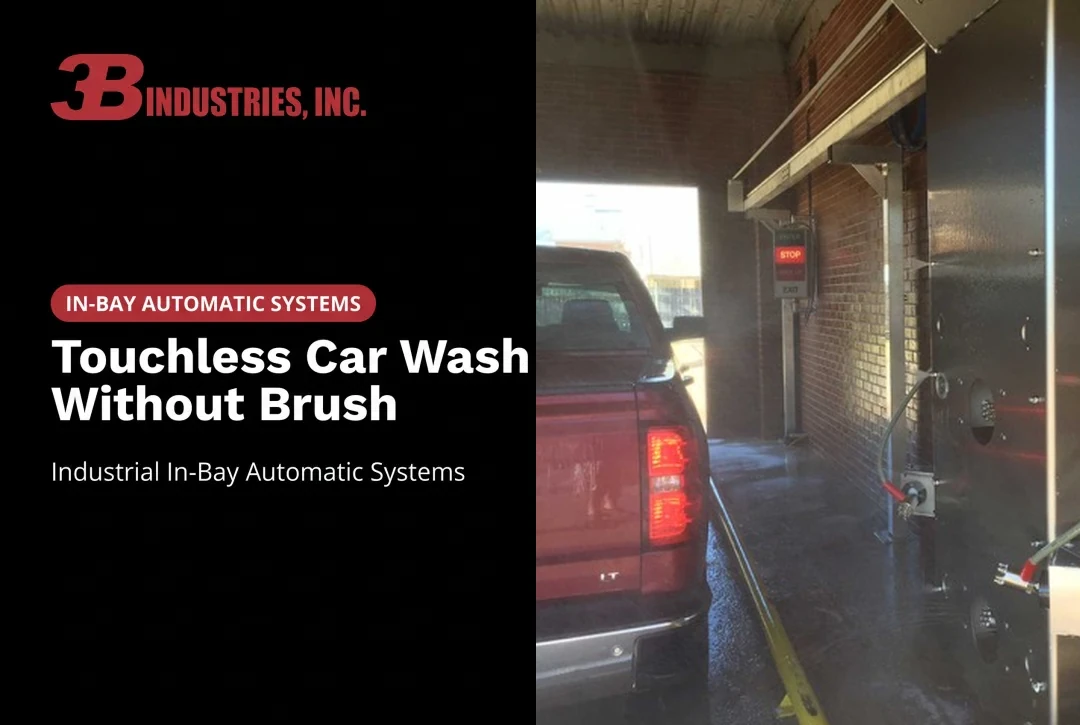
In touch-free systems, tri-foam works alongside presoak chemistry during dwell time. Follow with enough high-pressure rinsing to strip loosened soil and remaining foam completely. Systems like 3B Industries' Crossfire support up to eight chemical options, including Triple Foam Applicators, plus a Dedicated Spot-Free Arch to help manage that final rinse stage.
Rollover and Conveyor Washes
For rollover and conveyor systems, tri-foam placement before cloth or wrap contact is common when lubricity is the priority. Every system still needs testing for brush behavior, residue buildup, and rinseability. Settings that work on one conveyor won't automatically transfer to another.
Platforms such as the Genesis Multi-Platform Operating System let operators configure cycle timing and soak periods across up to 20 wash cycles per package. That control sets when tri-foam engages relative to friction and rinse stages.
Whatever the bay type, lock in a repeatable application routine before you change package placement or pricing.
A Practical Application Checklist
- Confirm chemical concentration against the manufacturer's specified dilution
- Inspect injector and arch coverage for even distribution
- Apply to a wet vehicle where the product calls for it
- Allow suitable dwell time without letting product dry on the surface
- Complete the recommended rinse at adequate pressure and volume
Run this full cycle on representative vehicles. Record cleaning quality, foam coverage, rinse performance, finish, chemical consumption, and customer response before you change package placement or pricing.
Never copy a competitor's dosing or cycle timing wholesale. Water temperature, hardness, nozzle design, conveyor speed, reclaim water, and chemical concentration differ by site and will change your results.
How Should Operators Choose a Tri-Foam Conditioner?
Start by matching your wash's primary goal — cleaning support, added lubricity, visual presentation, shine, drying, or some combination — against the formula's documented purpose. Choosing by color or foam volume alone skips the part that actually affects performance.
Check Equipment Compatibility First
Evaluate compatibility with your specific setup:
- Touch-free automatic and in-bay systems
- Rollover and tunnel conveyor equipment
- Cloth media, foam arches, pumps, injectors, and metering systems
Review the technical documentation for recommended dilution, pH, handling requirements, surface compatibility, storage needs, and reclaim-water guidance. Some formulas contain components that can affect downstream equipment or water treatment systems, so this step isn't optional.
Water Quality Changes the Outcome
Hard or reclaimed water influences foam behavior, rinsing, residue, and overall consistency. Professional Carwashing & Detailing notes that high total dissolved solids can leave mineral deposits, while treated water tends to react more effectively with chemical products. Consult your chemical supplier and run controlled tests under your actual site conditions before committing.
Compare Suppliers Beyond Price
Look past the per-container cost and compare:
- Formulation support and troubleshooting assistance
- Chemical availability and bulk-order options
- Integration with your existing equipment
- Response time when something goes wrong
Manufacturer-direct suppliers often provide faster troubleshooting and more direct product expertise than a middleman distributor, which matters when a wash package underperforms and you need answers fast.
3B Industries' Tri-Foam Car Wash Conditioner is a manufacturer-direct option to evaluate for premium packages. Confirm current technical data, application instructions, and equipment compatibility before purchase or installation.
Common Tri-Foam Problems and How to Troubleshoot Them
Most tri-foam issues trace back to one of five factors: water quality, chemistry, temperature, dilution, or dwell time. Work through the system methodically rather than guessing.
Weak or Inconsistent Foam
Check chemical level, injector draw, and metering settings first. Then inspect:
- Air and water pressure
- Clogged nozzles
- Product temperature
- Water quality
- Mixing or storage errors
Foam Looks Impressive but Cleaning Is Poor
Heavy foam coverage can mask a real problem underneath. Before increasing chemical concentration, test the complete wash cycle for:
- Incorrect presoak balance
- Insufficient dwell time
- Poor nozzle coverage or excessive conveyor speed
- Inadequate rinse performance
Residue, Spotting, or Streaking
Check these common causes before changing your formula:
- Over-application
- Product drying on the surface before rinse
- Incompatible reclaim water
- Incorrect rinse sequence
- Poor spot-free water quality
- Formula incompatibility with your equipment
Excessive Chemical Use or Customer Complaints
Review these settings and expectations together:
- Metering calibration
- Package timing
- Vehicle coverage
- Fragrance and color expectations
Document every change and adjust one variable at a time. Changing multiple settings simultaneously makes it impossible to know what actually fixed the problem.

For safety data, site-specific compatibility, and troubleshooting beyond these general checks, refer to the product label, SDS, technical data sheet, your equipment manufacturer, and your chemical supplier directly.
Frequently Asked Questions
What is tri-foam at the car wash?
Tri-foam is a multi-stage foamed chemical applied in the tunnel or in-bay cycle, often in several colors. Depending on the formula, it supports cleaning, adds lubricity, improves shine and protection, or elevates the customer experience.
What does a tri-foam conditioner do at a car wash?
A conditioner formula distributes cleaning chemistry, supports dwell time, adds lubricity, and improves appearance. Results still depend on the formulation and the rest of the wash process.
Is a tri-foam car wash worth it?
Yes—when it improves the wash experience or delivers measurable cleaning and finish results. Weigh total chemical cost, equipment performance, and customer response before you commit.
Is a foaming car wash better?
More foam isn't automatically better. Cleaning depends on chemistry, dwell time, coverage, agitation or pressure, rinsing, and correct equipment settings working together.
When should I apply tri-foam?
Conditioner/cleaner tri-foam is typically applied after presoak and before friction or later rinsing. Polish-oriented formulas often come later. Always confirm placement against your product and equipment instructions.
What do professional detailers use to wash cars?
Professionals select purpose-built shampoos, presoak chemicals, foams, rinseless products, or protectants based on soil type, surface, and desired finish. Automatic car wash tri-foam isn't interchangeable with every detailing product.