
Introduction
Buying a self-service car wash means acquiring more than a lot with vacuums and a change machine. You're buying a physical site, mechanical systems, an established customer base, permits, and utility accounts.
You're also taking on a maintenance obligation that doesn't disappear just because customers wash their own cars.
That's the biggest misconception new buyers bring to the table: self-service equals passive. It doesn't. Lower labor costs don't eliminate the need for cleaning, repairs, security monitoring, supply management, and customer service. Someone still has to answer the phone when a bay goes down on a Saturday afternoon.
This guide walks through a practical buyer's framework:
- Assessing whether the model fits you
- Verifying financial performance
- Inspecting the site and equipment
- Modeling the full investment
- Completing due diligence
- Planning the transition to ownership
Key Takeaways
- The cheapest listing rarely wins; location quality, verified cash flow, and equipment condition drive real value.
- Review financial, operational, legal, environmental, utility, and equipment records before making an offer.
- Model owner-operated and managed scenarios separately, including maintenance, insurance, utilities, and debt service.
- Bring in an accountant, attorney, lender, and equipment professional early to cut acquisition risk.
Is a Self-Service Car Wash the Right Business to Buy?
How the Self-Service Model Works
In a self-service wash, the customer does the work. The owner's job is to provide functioning bays, payment systems, water, chemicals, vacuums, and a site that's clean and safe. Everything else, the actual scrubbing and rinsing, is customer-driven.
Demand for this format is trending upward. 17% of car-wash customers said self-serve was their most-used format in 2025, up from 13% just a year earlier, according to the International Carwash Association's 2025 usage data. That shift helps with demand planning, though it tracks preference—not site-level revenue or profitability.
Self-Service vs. Other Wash Formats
| Format | Labor Needs | Customer Control | Capital Intensity |
|---|---|---|---|
| Self-service | Low, but not zero | High | Moderate |
| In-bay automatic | Low to moderate | Moderate | Moderate to high |
| Tunnel/conveyor | High | Low | High |
| Full-service | Highest | Lowest | Highest |
Who Should Buy One
A self-service wash suits a buyer who's comfortable:
- Reviewing mechanical equipment, not just financial statements
- Managing vendors for chemicals, parts, and repairs
- Monitoring site conditions remotely or through regular visits
- Making ongoing capital decisions, from pump replacements to payment upgrades
Advantages and Risks
Advantages of the self-service model:
- Multiple revenue points from bays, vacuums, vending, and detailing add-ons
- Little to no front-counter staffing
- Flexible owner involvement once equipment is reliable
- Higher ticket size from upgrades like variable pressure or card readers
Risks to weigh carefully:
- Weather swings that crush wash volume for weeks at a time
- Vandalism and equipment tampering
- Utility cost spikes, especially water and electricity
- Environmental compliance around wastewater discharge
- Deferred maintenance the seller didn't disclose
How to Evaluate a Self-Service Car Wash Before Buying
Financial Records to Request
Ask for several years of:
- Income statements and tax returns
- Bank and payment processor records
- Utility, chemical, and payroll/contractor invoices
- Insurance, repair, and property tax history
- Rent or mortgage obligations
Reconciling Revenue and Normalizing Cash Flow
Coin drops, card readers, mobile payments, and vacuum revenue rarely match perfectly. Flag any gap between point-of-sale reports, bank deposits, and filed tax returns before you go further.
Once revenue checks out, normalize cash flow. Separate recurring operating costs from one-time repairs, owner perks, and deferred expenses you will inherit.
BizBuySell's guidance on add-backs notes that discretionary personal expenses—such as an owner's vehicle lease or health insurance—get added back to recast true earnings. Then:
- Add back owner-only perks that will not continue under new ownership
- Deduct a market-rate replacement salary if the seller works the site daily
- Confirm the adjusted figure before you rely on it for valuation
Site and Equipment Inspection
Walk the property with two lenses: location and machinery.
Site fundamentals:
- Visibility and traffic patterns
- Vehicle entry and exit paths
- Nearby housing, competing washes, and future development or road projects
- Zoning confirmation for the current use
Equipment checklist:
- Pumps, motors, compressors, and hoses
- Payment systems and meter boxes
- Chemical delivery and foam brush condition
- Water softeners, reverse-osmosis units, and reclaim systems
- Drainage, lighting, signage, and security cameras
Get an independent inspection and written repair estimates. Ask for service logs, warranties, and installation records, not just a verbal assurance that "everything works fine."
Legal, Environmental, and Deal Structure Checks
Confirm the legal foundation of the deal:
- Ownership of land and equipment
- Lease assignment terms, if you are not buying the real estate
- Liens, UCC filings, and open contractor claims
- Operating permits and unresolved code violations
Review environmental compliance next. Verify wastewater discharge permits, reclaim or separator maintenance, and chemical storage practices against local and state rules. Open violations here can stall closing or become your cleanup cost.
A business-only purchase, an asset purchase, and a real-estate-inclusive deal each carry different tax and financing implications. Have counsel review the structure before you sign anything.
Costs, Financing, and Return Analysis
Building Your Acquisition Budget
Your budget needs to cover more than the sticker price:
- Down payment and closing costs
- Lender and professional fees
- Immediate repairs and technology upgrades
- Working capital, inventory, and insurance
- Permits and a contingency reserve
Auto Laundry News flags these recurring cost categories for self-service sites:
- Chemicals and softener salt
- Utilities and fuel
- Equipment maintenance and pit pumping
- Advertising
Get current, regional pricing for each before you finalize an offer.
Modeling Cash Flow: Three Scenarios
Run the numbers three ways:
- Owner-operated — you handle daily checks, minor repairs, and vendor calls yourself
- Partially managed — a contractor covers cleaning and routine maintenance, you handle bigger decisions
- Absentee-managed — a manager or service company runs day-to-day operations entirely

Staffing coverage changes the math significantly. Layer payment processing fees, insurance, and debt service on top to see how each scenario really performs.
Financing Options
Common paths include:
- Conventional commercial loans
- SBA-backed financing
- Equipment financing
- Seller financing
Buyers often blend two or more of these.
SBA 7(a) loans support complete or partial changes of ownership, real estate, equipment, and working capital. The maximum loan amount is $5 million, according to the SBA's 7(a) loan program page.
Eligibility depends on creditworthiness, repayment ability, and inability to secure comparable credit elsewhere on reasonable terms. Confirm current requirements with a lender directly rather than relying on general figures.
Key Metrics You Need to Know
These terms aren't interchangeable:
- Seller's discretionary earnings (SDE): normalized pre-tax profit including owner add-backs
- Net operating income (NOI): income after operating expenses, before debt service
- Cap rate: stabilized NOI divided by market value (unlevered)
- Cash-on-cash return: annual pre-tax cash flow divided by your equity investment (levered)
- Break-even volume: the wash count needed to cover fixed and variable costs
Don't let an advertised revenue multiple substitute for site-specific underwriting. Stress-test your model against lower wash volume, higher utility costs, and a major equipment failure.
Equipment, Site, and Operating Readiness
Core Self-Service Infrastructure
Equipment age, brand support, and parts availability directly affect downtime and future capital needs. A bay running on discontinued parts is a liability, not a bargain.
Essential infrastructure includes:
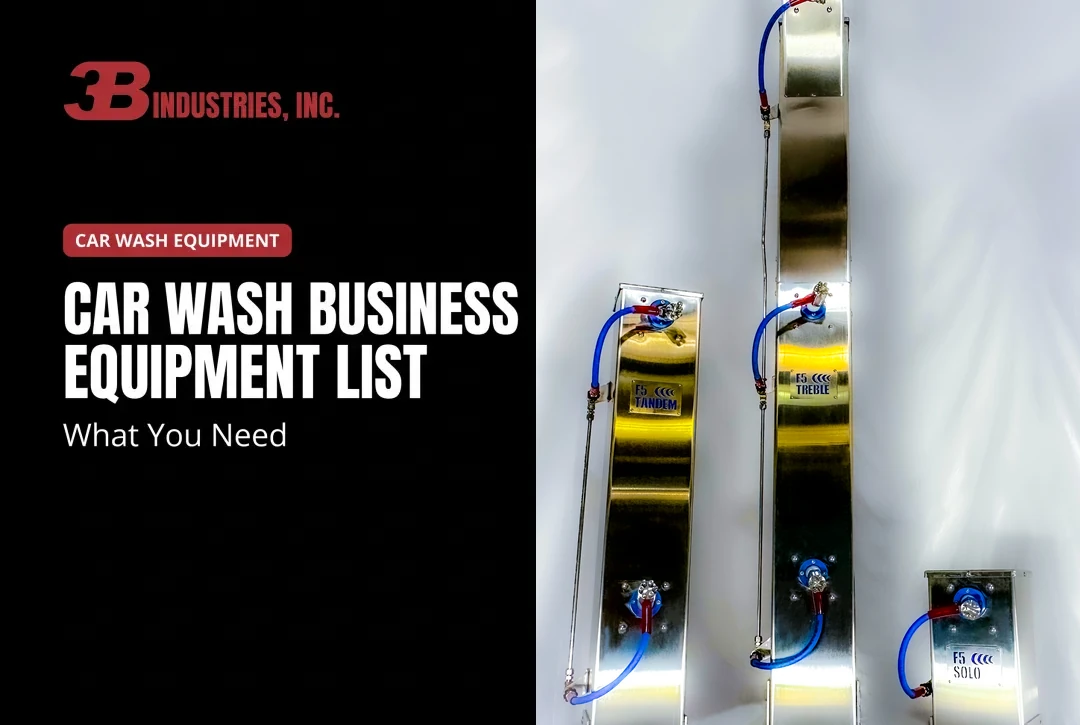
- High-pressure pumps and chemical delivery systems
- Air compressors and payment controls
- Water softening, spot-free rinse, and reclaim systems
- Oil-water separation and proper drainage
- Electrical service, lighting, and winterization
3B Industries' Omni II self-service system, for example, runs on operator-configurable functions with multi-tiered pressure settings up to 1,500 PSI and fast purge times between function changes. It accepts coins, tokens, bills, and credit cards. Compare that setup against whatever is already installed at the site you're evaluating.
Water Quality and Discharge Rules
Water isn't a side issue. The EPA's WaterSense guidance references an industry recommendation that self-service nozzles stay at or below 3.0 gallons per minute.
Beyond flow rate, check whether the site uses well water, deals with hard-water buildup, or operates under local wastewater discharge restrictions, particularly for reclaim and separator systems. Requirements vary by state and city, so confirm local rules before closing.
Customer-Facing Readiness and Security
Walk the site as a customer would:
- Are bays clean, with working hoses and brushes?
- Is signage readable, and is payment convenient?
- Is lighting adequate for evening use?
- Are vacuum areas maintained and accessible?
For security, confirm the site has:
- Cameras covering bays and payment areas
- Tamper-resistant payment systems
- Documented cash-handling procedures
- A clear vandalism response plan
Planning a Refresh or Expansion
If the equipment needs replacing soon, compare a complete self-service system against piecemeal part swaps. Judge full systems such as 3B Industries' American-made Omni II on site configuration, capacity, durability, and service support. That beats replacing components one failure at a time.
Build a preventive-maintenance calendar covering:
- Daily cleaning
- Weekly inspections
- Chemical checks and payment audits
- Seasonal freeze protection
Skipping this is how small problems become expensive ones.
The Acquisition Process: From Listing to Ownership
Most self-service car wash purchases follow this path from first look to day-one operations:
- Define your acquisition criteria and budget
- Identify listings or work with a broker
- Sign confidentiality documents
- Review the initial information package
- Tour the site in person
- Submit a conditional offer
- Complete due diligence (financials, equipment, environmental, and title)
- Secure financing against verified cash flow and asset condition
- Negotiate final terms and close
- Transition operations with a defined handover window

Questions to Ask the Seller
- Why are you selling, and how involved are you day-to-day?
- What are the busiest and slowest periods?
- Are there known equipment defects or recent capital expenditures?
- What recurring vendor contracts or complaints should I know about?
- What upcoming regulatory requirements apply to this site?
Structuring Contingencies
Build offer contingencies that let you walk—or renegotiate—if issues appear before closing:
- Financing approval
- Physical inspection and equipment condition
- Clear title and lease assignment
- Permits and environmental review
- Confirmation of financial records
Each item protects you between accepted offer and funded close.
Negotiating the Transition
Push for practical handover support: vendor introductions, equipment training, payment-system access, chemical specifications, and a defined handover period. If the seller leaves the day after closing, simple gaps—pump service contacts, chemical ratios, payment admin access—turn into downtime fast.
Once the handoff plan is clear, map who will support site performance after you own it. 3B Industries can tie demographic analysis, site selection support, equipment, installation, and chemicals into one operating plan for new and expanding self-service owners.
Frequently Asked Questions
Is buying a self-service car wash a good investment?
It depends on verified cash flow, site demand, equipment condition, purchase price, and financing terms. There's no guaranteed return; underwrite each site on its own numbers.
How much does it cost to buy a self-service car wash?
Prices vary widely based on location, land ownership, bay count, equipment age, and financial performance. Budget for repairs, working capital, and upgrades on top of the purchase price.
What should I inspect before buying a self-service car wash?
Review financial records, equipment condition, water and wastewater systems, permits, payment technology, security, and deferred maintenance. Get an independent inspection rather than relying on the seller's word.
Can a self-service car wash be operated as an absentee business?
Limited staffing is possible, but cleaning, inspections, repairs, security monitoring, and customer support still need accountable people and documented systems in place.
Is it better to buy an existing car wash or build a new one?
Buying gets you an existing customer base and faster startup; building gives you customization and newer infrastructure. Compare total project costs, permitting timelines, and verified operating performance before deciding.
What financing options are available for buying a self-service car wash?
Options include conventional commercial loans, SBA-backed financing, equipment financing, and seller financing, often blended together. Confirm current terms and eligibility directly with lenders before making assumptions.