
Introduction
A car can come out of the tunnel spotless and still disappoint the customer. Why? Water beading on the hood, streaking down the windshield, or pooling in the wheel wells.
Leftover moisture undoes a good wash. It creates spotting, especially with hard water, and leaves customers wondering if the wash actually worked.
Air dryers and blowers solve this without adding friction to the paint. High-velocity air pushes water off broad panels and clears it from mirrors, grilles, emblems, and seams, areas a towel often misses.
This guide covers how commercial drying equipment works, the main equipment types, the specs that matter when comparing units, and how to plan a system that holds up under daily volume—so you can protect finish quality without slowing the lane.
Key Takeaways
- Commercial dryers and consumer blowers are not interchangeable; continuous-duty motors and coverage differ significantly.
- Compare equipment on airflow, pressure, coverage, noise, energy use, and serviceability, not horsepower alone.
- Match the dryer to your wash format, vehicle mix, throughput, and electrical service before shopping specs.
- Fold installation, drainage, intake protection, and operator safety into the purchase decision—not the post-install punch list.
How Car Wash Air Dryers and Blowers Work
High-velocity air breaks the surface tension holding water to a painted panel. Once that bond breaks, the airstream pushes water off the vehicle and clears standing water from seams, mirror housings, and recessed trim—areas a towel usually struggles to reach without direct contact.
Airflow vs. Pressure: Why Both Matter
CFM (cubic feet per minute) measures air volume. A high CFM number sounds impressive, but volume alone doesn't guarantee dry panels. Nozzle geometry, outlet size, and distance from the vehicle determine how much of that air actually reaches the surface with useful force.
Manufacturer data illustrates the tradeoff:
| System | Motor | Airflow | Air Speed |
|---|---|---|---|
| MacNeil Tech 21 (10 HP) | 10 HP | 3,400 CFM | 155 MPH |
| MacNeil Tech 21 (15 HP) | 15 HP | 4,400 CFM | 170 MPH |
| AutoVac AutoDryer (15 HP) | 15 HP | 4,950 SCFM | 185 MPH |

Sources: MacNeil Tech 21 Drying System and AutoVac AutoDryer
AutoVac's round nozzles (available in 6, 8, 12, 16, and 20-inch sizes) concentrate airflow to raise velocity at the outlet. That's a different design goal than simply maximizing CFM, and it's why two dryers with similar horsepower can perform very differently on the same vehicle.
Core Components
A professional drying system typically includes:
- Motors rated for continuous duty in a wet environment
- Blowers or fan wheels that generate the airflow
- Ducts and manifolds that route air to fixed nozzles
- Housings and mounting hardware built for tunnel or in-bay installation
- Controls that sync dryer activation with conveyor position or vehicle presence
- Filters protecting motors from debris intake
Surface Conditions Change the Outcome
Waxes, sealants, and ceramic coatings encourage water to bead and roll off, which helps air dryers finish the job quickly. Flat or heavily contoured panels, deep trim lines, and older paint with reduced hydrophobic properties all slow drying and may need a longer air path or a manual finish.
According to Professional Carwashing & Detailing, nozzle adjustment and matching dryer horsepower to conveyor speed both directly affect coverage. Run too fast and water gets left behind; run too slow and throughput drops.
Air drying also reduces the paint contact that comes with towels or friction dryers, but it isn't a replacement for a properly controlled wash. Chemistry, rinse quality, and a clean air path still do most of the heavy lifting before the dryer ever engages.
Types of Car Wash Drying Equipment
Different wash formats call for different drying hardware. Here's how the main categories stack up.
Fixed Tunnel and In-Bay Systems
Overhead and side-mounted dryers are built into conveyor tunnels and in-bay automatics. Nozzle placement and coverage angle drive consistency from bumper to bumper.
Configuration range is wide. Per the Washworld Hybrid Booklet, a Profile Apex 30 HP option uses six 5 HP motors. A 40 HP setup pairs four 5 HP side producers with two 10 HP top producers on 208/230 VAC three-phase service.

Portable Electric Blowers
Handheld and stand-mounted blowers fill in where fixed systems can't reach, or serve as the primary dryer for detailing bays and smaller operations. The XPOWER A-16, for example, delivers 320 CFM from a 6 HP dual motor on standard 115V household service, with variable speed and swappable flat or cone nozzles.
Best for: spot drying, mirrors, grilles, door jambs, and self-service or detail operations without tunnel infrastructure.
Compressed-Air Systems
Industrial air compressors can supply targeted drying nozzles. Duplex units built for car wash use typically deliver about 15 to 44 CFM, depending on pressure and horsepower, according to the Hertz HBD brochure.
Before choosing this route, weigh:
- Operating cost per cycle compared with electric blowers
- Moisture buildup in compressed lines
- Noise from the compressor itself
- Whether existing compressor capacity is already committed to other equipment
Purpose-Built vs. Leaf Blowers and Cordless Tools
A consumer leaf blower or cordless blower can move air, but it wasn't designed for repeated commercial cycles.
| Factor | Commercial Dryer | Leaf Blower / Cordless |
|---|---|---|
| Duty cycle | Built for continuous operation | Rated for intermittent home use |
| Weather resistance | Designed for wash-bay moisture | Often not rated for wet environments |
| Serviceability | Parts and service support available | Limited or no commercial parts support |
| Noise controls | Sound-abatement options exist | Rarely addressed |
Quick Reference: Matching Equipment to Use Case
- Tunnel dryers: high-volume conveyor operations needing consistent, hands-off drying
- In-bay dryers: in-bay automatics where the vehicle stays stationary during the cycle
- Portable blowers: detailing, self-service touch-up, or low-volume sites
- Compressed-air tools: targeted drying where compressor capacity already exists
Match the dryer to the wash format—tunnel, in-bay, self-service, or fleet—when you plan the full equipment package.
Large-Vehicle and Fleet Dryers
Trucks, buses, and other tall profiles need different nozzle height and hose reach than passenger cars. Aerodry large-vehicle systems, for example, use 15 HP three-phase motors and stainless steel construction sized for longer wheelbases and higher rooflines.
How to Choose the Right Air Dryer or Blower
Choose drying hardware for the wash format you run—not the one in a brochure. Throughput, vehicle mix, and bay layout drive airflow needs, nozzle placement, and whether a fixed arch, onboard dryer, or portable blower fits best.
Match the system to your operation:
- Conveyor tunnel
- In-bay automatic
- Self-service bay
- Detailing shop
- Fleet or large-vehicle facility
Match Performance to Real Conditions
Before comparing specs, define:
- Vehicle size range you actually serve (sedans vs. trucks vs. mixed fleet)
- Expected daily volume and target cycle time
- Water volume typically left after rinse
- Areas that routinely stay wet (mirrors, rocker panels, tailgates)
Ask suppliers for verified test data on comparable vehicles rather than accepting generic marketing claims.
Power and Electrical Requirements
Motor specs need to match your electrical service, not the other way around. Washworld's dryer motors, for reference, draw roughly 27 amps per 10 HP motor and 40 amps per 15 HP motor at 208V three-phase. Confirm:
- Available voltage and phase at the site
- Amperage draw per motor and total connected load
- Continuous-duty rating vs. intermittent rating
- Whether the panel needs upgrading before installation
Construction and Durability
Wash bays are hard on equipment: humidity, chemical overspray, and temperature swings all take a toll. Look for:
- Stainless steel or corrosion-resistant housings
- Sealed motors and bearings
- Protected intakes to keep debris out
- Drainage designed into the mounting
Noise and Comfort
Dryer sound levels vary by model and distance. AutoVac reports 85 dBA at 10 feet, dropping to 72 dBA at 50 feet for its 15 HP unit. Washworld's onboard dryer is rated at 94 dB (distance not always stated—ask for the same test point when you compare). Factor in customers waiting nearby and staff who work beside the equipment all day.

Total Cost of Ownership
Purchase price is only one line item. Also budget for:
- Installation and electrical work — panel upgrades, conduit, mounting
- Replacement parts — filters, nozzles, belts
- Routine service — scheduled inspections and labor
- Energy consumption — especially under continuous cycling
- Downtime — lost revenue while equipment is offline
Buyer's Checklist
Require any supplier to document:
- Airflow and pressure figures, with test conditions
- Drying coverage across vehicle classes
- Duty cycle rating
- Sound levels at stated distances
- Service clearances and installation requirements
- Replacement-part availability and lead times
For most operators, the practical setup is a combination: a fixed system for the bulk of drying, plus a portable blower for spot finishing on busy days or complex vehicle shapes. When you compare options, weigh documented test data, electrical fit, corrosion resistance, and parts lead times—the same criteria 3B Industries uses when specifying dryers and blowers for commercial and fleet wash sites it equips and operates.
Installation, Maintenance, and Safety
Getting the dryer running correctly starts before you mount it.
Pre-Installation Review
Confirm these before equipment arrives:
- Available electrical service and panel capacity
- Mounting structure and bay/tunnel dimensions
- Drainage and expected water overspray exposure
- Ventilation and service access clearance
- Integration points with existing wash controls
Routine Maintenance
A basic preventive schedule should include:
- Inspecting nozzles and ducts for buildup or misalignment
- Cleaning or replacing intake filters
- Checking fasteners and mounting hardware for vibration loosening
- Monitoring belts and bearings where applicable
- Clearing debris from air intakes
- Logging unusual noise or vibration for early diagnosis
According to Aerodry's installation documentation, its motors are sealed and don't require greasing. The guide still recommends keeping intakes clear and checking junction-box connections regularly.
Safety in Wet, High-Velocity Environments
High-velocity air and electrical equipment in a wet bay create real hazards. Key compliance points include:
- Hearing protection: OSHA's 1910.95 noise standard caps 8-hour exposure at 90 dBA; a hearing-conservation program is required at 85 dBA TWA.
- Machine guarding: Fan blades below 7 feet must be guarded per OSHA 1910.212, with openings no larger than half an inch.
- Wet-location electrical: Equipment must be listed for damp or wet locations under OSHA 1910.303.
- GFCI protection: Required for specified receptacle types under OSHA 1910.304.
Confirm manufacturer-recommended service intervals with your equipment supplier. Have a licensed electrician verify current NEC and local code requirements before you finalize installation.
Planning a Complete Drying Solution
Drying doesn't start at the dryer. It starts with how much water is on the vehicle when it gets there.
Reduce Water Before It Reaches the Dryer
- Position rinse stages to shed excess water before the dryer zone
- Apply hydrophobic drying aids to reduce surface tension, which helps air dryers finish faster
- Coordinate dryer activation timing with vehicle movement so airflow hits the vehicle at the right moment
- Keep a finishing method (towel or spot blower) available for areas the main system can't reach
Water Quality Changes the Outcome
The International Carwash Association's 2017 study found that conveyor washes lose an average of 21.4% of fresh water to evaporation and carryout, while in-bay automatics lose about 20.6%. That's water your dryer is fighting against.

3B Industries' own water-quality guidance ties this directly to results: minerals like calcium, magnesium, iron, and sediment in poorly treated water cause spotting and streaking even after a strong wash and dry cycle. Properly treated water improves drying performance, finish quality, and detergent efficacy.
Measure What Matters After Installation
Track these metrics once a new dryer is running:
- Customer complaints about wet vehicles
- Rewash requests
- Manual finishing labor time
- Unplanned downtime
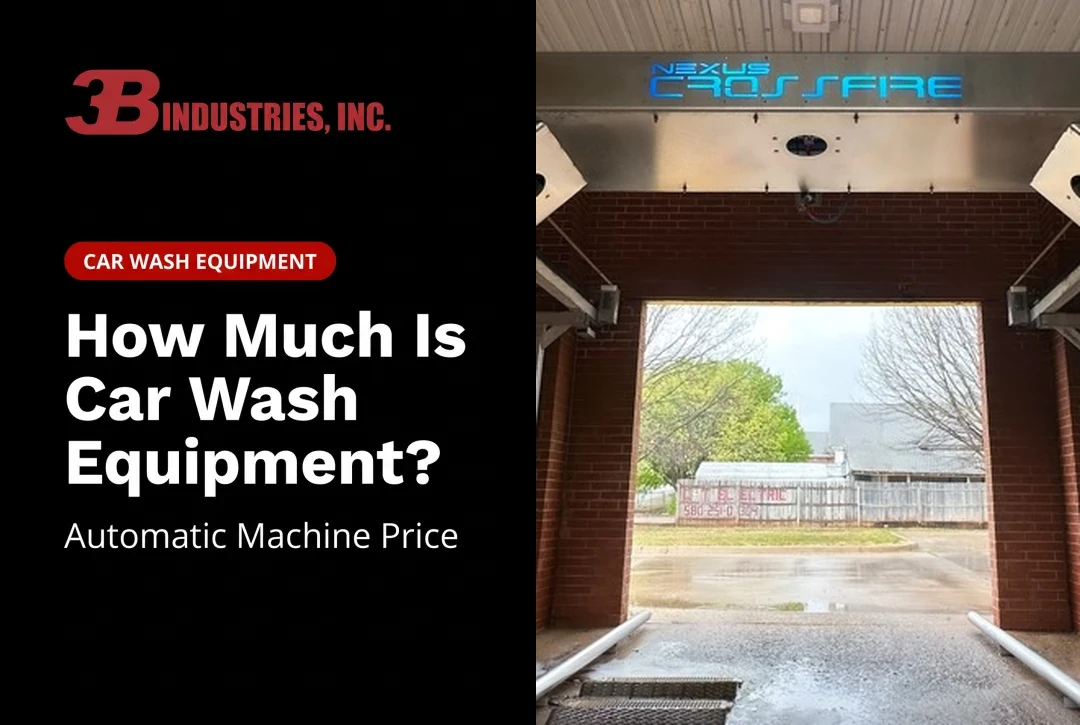
3B Industries has applied this approach at its own operated locations. Duncan Oak Car Wash runs two in-bay Crossfire units with integrated blowers alongside five self-service bays. Red Oak Car Wash in Lawton pairs Omni II self-service units with in-bay blowers across five bays. Both sites build drying into the wash system from the start, not as a bolt-on later.
Operators planning a drying system—or a full wash build—can work with 3B Industries on equipment integration and custom fabrication when a site needs application-specific mounting or components.
Get It in Writing
Before committing, get a site assessment and a written proposal that separates:
- Equipment cost
- Installation and electrical work
- Commissioning and training
- Ongoing maintenance support
- Future expansion options
Frequently Asked Questions
What is the best way to dry a washed car?
Touch-free air drying minimizes paint contact and works well on coated surfaces. Microfiber towels handle mirrors, grilles, and other spots air can't reach. Most commercial washes combine both methods.
What equipment do I need for my car wash business?
At minimum, you'll need a wash system, water and chemical delivery equipment, drying equipment, pumps, controls, and safety components. The exact package depends on whether you're running a tunnel, in-bay automatic, or self-service format.
What is the best car wash blower?
There's no single "best" model. The right blower depends on commercial duty rating, airflow, pressure, coverage, noise, durability, and your expected vehicle volume, not brand reputation alone.
Are car air blowers any good?
Yes, for touch-free drying and hard-to-reach crevices like mirrors and grilles. Limitations show up with large vehicles, battery-powered units, and continuous commercial use where duty-cycle ratings matter more than raw power.
How do I choose an air dryer for a commercial car wash?
Start with your wash type, throughput, and vehicle mix, then evaluate cycle time, electrical capacity, corrosion resistance, noise, and maintenance access. Total cost of ownership matters more than sticker price.
How do you maintain a car wash air dryer or blower?
Regularly clean intakes and filters, inspect nozzles and ducts, and check fasteners and mounts for looseness. Follow manufacturer-recommended service intervals and document any unusual noise or vibration right away.