
But demand isn't universal. It shifts with vehicle ownership rates, local driving habits, climate, competition, and what customers expect from a wash in your market.
ICA reports that 73% of consumers washed at a professional car wash most often in Q4 2024, with 93% of members planning to renew. That's meaningful recurring demand, but it doesn't guarantee results at any specific address.
People come to this industry from different directions: first-time entrepreneurs, convenience-store owners adding a wash, multi-site operators expanding, fleet-wash businesses, and investors looking for a durable local asset. This article covers what a solid car wash business plan actually needs before you commit capital.
Key Takeaways
- A car wash business plan doubles as a financing document and operating roadmap for site, format, equipment, staffing, and compliance
- Match your model (self-service, in-bay automatic, tunnel, full-service, or hybrid) to site, capital, labor, and customers
- Verified research on demand, pricing, traffic, and costs beats optimistic revenue projections every time
- Launch timing hinges on site control, permitting, construction, and hiring, not a fixed universal schedule
What Is a Car Wash Business Plan?
A car wash business plan is a structured document explaining how your business will attract customers, deliver vehicle-cleaning services, generate revenue, control costs, and hit specific financial and operational targets.
Good plans don't start with assumptions. They translate an idea into evidence-backed decisions:
- Who your customers are
- What services you'll offer and how you'll price them
- Which site you'll use and what equipment you need
- Who you'll hire and which suppliers you'll rely on
- How much funding the project requires
Common ownership and operating structures include:
- Owner-operated versus manager-led
- Standalone wash versus one attached to a convenience store or fuel station
- Single local site versus a multi-site operation built for scale
- Self-service versus fully automated versus full-service with staff
Each structure changes what belongs in your plan. A convenience-store add-on wash has different traffic and staffing assumptions than a standalone express tunnel. A multi-site operator needs a plan showing how systems and management replicate — not just how one location performs.
What to Know Before You Start a Car Wash Business
A car wash looks simple from the customer's seat: pull in, wash, leave. Running one requires coordinating real estate, construction, equipment, water and drainage infrastructure, chemicals, payment systems, maintenance, staffing, and compliance — all at once.
Expect real time investment before you open, including:
- Market research and site visits
- Financial modeling and lender or investor conversations
- Permitting and zoning approvals
- Supplier selection and construction coordination
- Hiring, training, and launch marketing
You won't do all of this alone. Most owners bring in consultants, engineers, attorneys, accountants, equipment makers, installers, or experienced operators for work outside their expertise. 3B Industries, for example, helps new owners with demographic analysis and site selection alongside equipment supply — practical vendor support that closes gaps in a first-time plan.
Research realistic time-to-revenue and break-even scenarios for your format. Separate four distinct milestones:
- Opening day — doors open, first customers arrive
- Operating stability — consistent volume, systems working smoothly
- Debt repayment progress — covering financing obligations
- Steady owner income — profit beyond debt service
These milestones rarely land on the same date. No universal timeline exists for any format, so build your own model from local numbers instead of a vendor's payback promise.

Decide your mindset early. A quick-income approach chases fast cash and often skips preventive maintenance and retention work. A long-term asset-building approach reinvests in reliable systems and equipment upkeep — and it holds value after the launch excitement fades.
Why Start a Car Wash Business and Which Early Decisions Matter
Starting a car wash can make sense, but it's conditional, not guaranteed. It depends on whether local demand, site access, competitive positioning, capital, and your own operating capability all line up together.
National industry surveys through 2024 still showed solid professional-wash preference and membership renewal. Those trends validate the category; they do not guarantee results on your corner. Use them to support the case, then run local research before you commit.
Potential advantages of the model include:
- Repeat-use behavior, since cars get dirty year-round regardless of weather
- Multiple service tiers that capture different price points
- Subscription or membership revenue for predictable cash flow
- Fleet accounts with commercial customers or dealerships
- Cross-selling opportunities with nearby retail or fuel businesses
Compare startup and operating costs honestly before committing:
- Land or lease costs and site design/construction
- Permits, utility connections, and water treatment or recovery systems
- Equipment purchase and installation
- Chemicals, labor, insurance, and ongoing maintenance
- Marketing, software, and debt service
Commonly overlooked risks deserve equal weight:
- Poor traffic flow, difficult ingress/egress, or weak street visibility
- Seasonal demand swings
- Water or wastewater constraints
- Equipment downtime paired with thin repair budgets
- Price wars with nearby competitors
- Overreliance on the owner being on-site every day
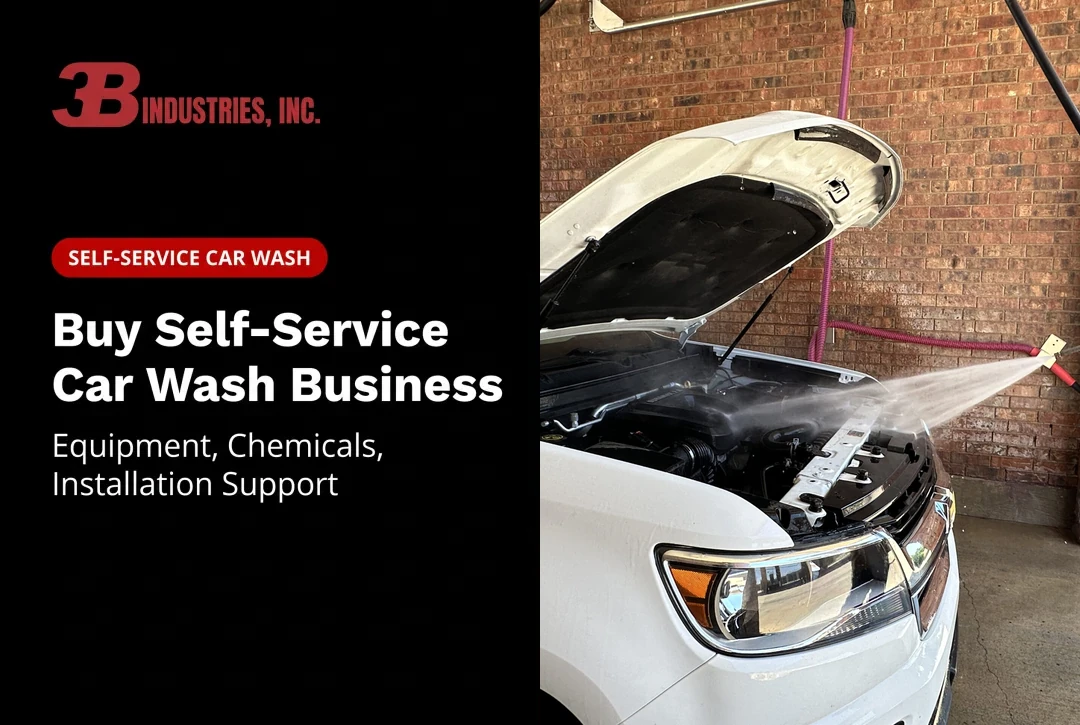
Self-service and in-bay automatic formats can lower labor needs because customers or automated systems handle much of the work. That is a real advantage, but risk moves toward equipment reliability. A machine that fails on a Saturday afternoon costs you revenue and reputation at the same time.
How to Create a Car Wash Business Plan – Step by Step
Use this sequence to turn a car wash idea into a testable operating and financial plan. Avoid three common mistakes:
- Copying industry revenue figures as your own
- Choosing equipment before validating the site
- Underestimating infrastructure costs
High traffic counts don't automatically become paying customers.
Step 1: Write the Executive Summary and Company Description
Summarize the car wash you're proposing: target market, site criteria, operating format, customer promise, ownership structure, funding need, and top-line financial goals. Write this section last, after the rest of the plan is finished.
Cover your legal structure, ownership responsibilities, and relevant experience. State your mission, service menu, and planned hours, then map milestones from site control through opening and stabilization.
Step 2: Define the Customer, Market, and Competitive Opportunity
Identify who's actually going to pay and return: everyday drivers, commuters, households, rideshare drivers, commercial fleets, dealerships, or customers who prefer self-service over automated cleaning.
Research the fundamentals:
- Local population and vehicle ownership rates
- Traffic patterns, weather, and seasonality
- Nearby employers and retail that generate consistent traffic
- Competitor locations, prices, reviews, wait times, and memberships
Then write a clear opportunity statement: what problem does your wash solve, and why can you compete without simply cutting prices?
Step 3: Select the Site and Validate Feasibility
Site selection makes or breaks a car wash. Evaluate visibility, traffic volume and direction, access points, turning movements, queue space, parking, and room for future expansion.
Confirm practical infrastructure: water supply, electricity capacity, drainage, wastewater handling, and vehicle circulation on the lot. Then check zoning, environmental obligations, water-use rules, building approvals, and signage requirements with your local authority before making any feasibility claims.
Build a sensitivity analysis showing how changes in traffic, conversion rate, average ticket, membership uptake, or construction cost shift your numbers. If a 10% drop in daily vehicles wrecks your break-even, that's a site worth reconsidering.
Step 4: Choose the Operating Model, Services, and Equipment
Compare formats by capital intensity, labor need, and target customer:
| Format | Capital Need | Labor Need | Best Fit |
|---|---|---|---|
| Self-service | Lower | Minimal | Budget-conscious, DIY customers |
| In-bay automatic | Moderate | Low | Moderate, dispersed demand |
| Tunnel/express | Highest | Moderate | High-traffic sites, volume play |
| Full-service | High | High | Customers wanting detailing/finishing |
Industry equipment estimates for tunnel systems run from $150,000 to $750,000 depending on tunnel length, while high-end self-service equipment runs roughly $40,000 to $50,000 per bay. Treat these as scenario anchors, not quotes. Get current numbers for your project.
Define your service menu: wash tiers, add-ons, vacuums, detailing, memberships, and fleet services. Then specify equipment needs — wash systems, pumps, dryers, water treatment, point-of-sale, and monitoring.
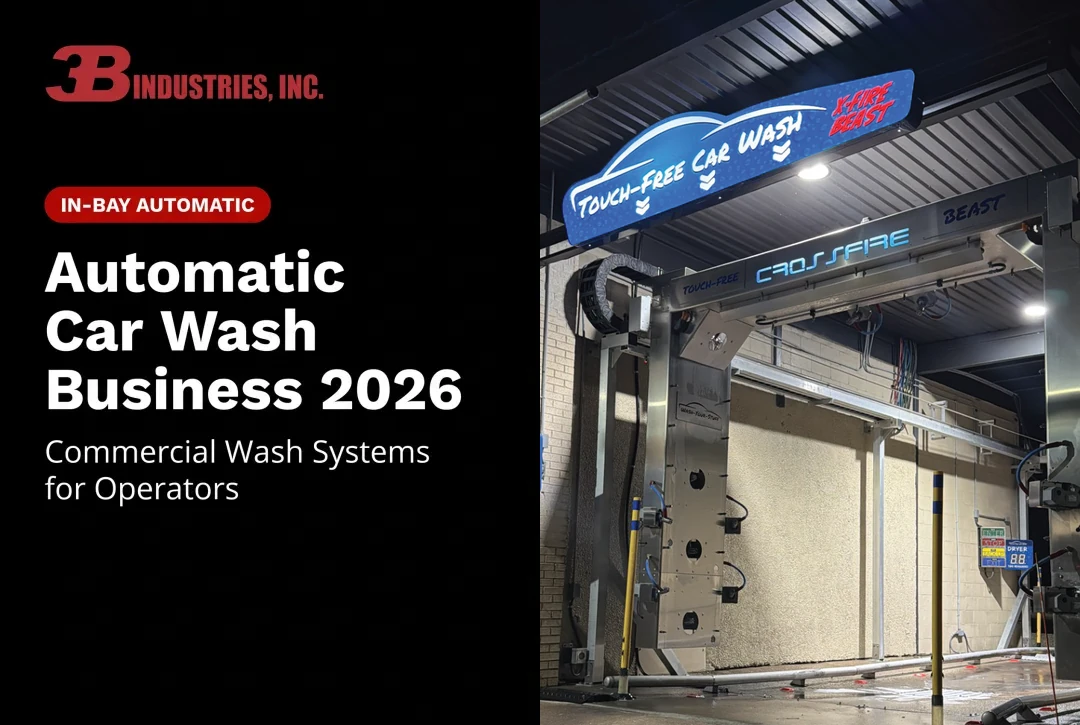
3B Industries manufactures American-made equipment worth evaluating against your site and format, including the Crossfire in-bay automatic and the Omni II self-service system. Compare any supplier on component quality (stainless steel and bearing-grade parts matter here), installation support, warranty terms, and total cost of ownership — not just sticker price.
Step 5: Build the Financial Model and Funding Plan
Separate one-time costs (property, construction, permits, equipment, installation, software, pre-opening payroll) from recurring costs like labor, utilities, chemicals, insurance, and debt service.
Model revenue with transparent assumptions: vehicles served per day, average ticket, service mix, membership uptake, fleet work, and seasonality. Show where each number came from.
Build three scenarios: base case, downside, and upside. Calculate cash-flow needs, break-even conditions, debt-service capacity, and how much contingency capital you'll need if opening runs slower than planned.
Research financing directly through lenders or U.S. Small Business Administration resources. SBA-backed loans can cover real estate, equipment, and working capital depending on the program, but eligibility and terms vary by lender — don't promise yourself a specific return before you've financed a dollar.
Step 6: Plan Legal, Compliance, Insurance, and Risk Controls
List every registration, license, permit, and approval that may apply: business licenses, zoning approvals, environmental reviews, water/wastewater permissions, employment obligations, and signage approvals. These vary by state and municipality.
EPA guidance recommends limiting fresh water use to 35–40 gallons per vehicle for conveyor and in-bay systems, noting that water reclamation can cut fresh-water use by 50% to 83%. Build wastewater and reclamation planning into your compliance work early, not as an afterthought.

Talk to a qualified insurance broker and attorney about premises liability, vehicle damage claims, workers' compensation, and pollution exposure. Then build a simple register: each approval, its deadline, who's responsible, and a backup plan.
Step 7: Design Operations, Staffing, Suppliers, and Customer Acquisition
Map your daily workflow from opening through payment, vehicle intake, wash delivery, quality checks, cash reconciliation, and closing. Write it down so new hires don't have to guess the sequence.
Staff according to your operating model and hours. Self-service needs minimal on-site labor; tunnel and full-service formats need attendants, a manager, and maintenance coverage. Build in training and backup coverage from day one.
Set up supplier relationships for equipment, chemicals, parts, and payment systems, with backups for anything critical. 3B Industries, for instance, supplies proprietary chemical formulations alongside its equipment line, giving owners a way to bundle supply relationships instead of managing several vendors separately.
For marketing, combine signage, local search, a website, social media, introductory offers, fleet outreach, and membership campaigns. Track leads, conversions, retention, and repeat visits from week one.
Step 8: Set Launch Milestones, KPIs, and Improvement Plans
Build a timeline from research through site selection, financing, design, approvals, construction, equipment installation, hiring, soft opening, full launch, and your first operating review.
Track early performance indicators like:
- Vehicles served per day
- Average ticket and service mix
- Membership starts and cancellations
- Conversion rate and repeat visits
- Labor cost, chemical use, and utility consumption
- Equipment uptime and customer complaints
Set review points (monthly for the first few months, then quarterly) to compare actual performance against your plan. Adjust pricing, hours, staffing, or equipment settings when the numbers say to.
Stabilize quality, safety, cash flow, and maintenance before adding a second site or making major new equipment investments. Growth built on an unstable first location tends to multiply problems, not profits.

Conclusion
Starting a car wash business is less about buying equipment quickly and more about building a plan you can defend. Before you spend a dollar, lock in the fundamentals:
- Prove local demand with real traffic and competitor data
- Pick a site that works for access, utilities, and permits
- Choose an operating model that matches your labor and capital limits
- Map the full customer path and cost structure end to end
A credible plan rests on researched assumptions, conservative scenarios, clear responsibilities, and measurable milestones—not unsupported profit promises. Owners who do well treat that plan as a living document, not a one-time packet for a lender.
Before you commit capital, review the plan with qualified financial, legal, permitting, construction, and equipment professionals. Each one catches something the others miss.
Frequently Asked Questions
How profitable is a car wash business?
Profitability depends on location, format, utilization, pricing, memberships, labor, utilities, and competitive pressure. Build a site-specific financial model rather than relying on an industry-average margin.
What car wash format pays the most?
No single format wins in every market. Tunnels offer the highest volume potential but need the most capital and traffic; self-service costs less to run but caps revenue per bay. Compare tunnel, in-bay automatic, self-service, and full-service options against your site and demand.
What does it cost to start a car wash business?
Startup costs vary widely based on land or lease terms, construction, format, equipment, and infrastructure. Get current local estimates for each line item and add contingency funds.
What should be included in a car wash business plan?
Include the executive summary, company description, market analysis, site feasibility, and operating model. Also cover equipment, marketing, staffing, compliance, financial projections, funding request, risks, and launch milestones.
Is a car wash a good business for a first-time entrepreneur?
Yes, if you have adequate capital, realistic expectations, and a willingness to learn operations. Assess technical, regulatory, staffing, and maintenance complexity honestly before you sign a lease.