
Introduction
There's no universal car wash equipment list. What you actually need depends on your service model, expected vehicle volume, site utilities, and how much automation you plan to run.
Many first-time operators make the mistake of shopping for equipment before answering these questions. The result? Underpowered pumps, water systems that can't keep up with demand, or automation that doesn't match the site's electrical capacity.
The real challenge is choosing equipment that delivers consistent cleaning while managing water use, protecting customer safety, and keeping operating costs sustainable over time.
This guide walks through the major business models, breaks down essential equipment by wash stage, covers water and chemical systems, and provides a practical checklist for purchasing and installation.
Key Takeaways
- Your business model (hand wash, self-service, in-bay automatic, or tunnel) determines 80% of your equipment list.
- Plan water treatment and wastewater handling before you order any wash equipment.
- Total cost of ownership matters more than sticker price when comparing vendors.
- Preventive maintenance protects uptime and can extend equipment life by years.
Which Car Wash Business Model Are You Setting Up?
Every equipment decision starts with your business model. The five common models differ sharply in labor, site needs, and automation.
| Model | Labor | Automation | Typical Equipment Complexity |
|---|---|---|---|
| Hand wash/detailing | High | Low | Portable tools, minimal fixed infrastructure |
| Mobile | High | Low | Vehicle-mounted systems, water storage, generators |
| Self-service | Low (customer-operated) | Moderate | Bay pumps, wands, payment controls |
| In-bay automatic | Low | High | Arches, sensors, dryers, touchless or friction systems |
| Tunnel/conveyor | Moderate | Highest | Conveyor, mitters, dryers, tunnel controllers |
According to the International Carwash Association's 2020 industry estimates, the U.S. market includes roughly 17,500 conveyor washes, 29,000 in-bay automatic locations, and 16,250 self-service facilities. That spread reflects how differently these models are built and equipped.

Mobile and Hand Wash: Portability First
Mobile and location-based hand wash operations prioritize:
- A service vehicle equipped with water storage or a waterless chemical system
- A portable high-pressure wand or hose-and-bucket setup
- Vacuums, generators, and detailing inventory
- Booking software or an app for scheduling
Self-Service, In-Bay, and Tunnel: Fixed Infrastructure
Fixed sites need durable, cycle-ready systems:
- Self-service: bay pumps, wands, foaming brushes, and payment controls
- In-bay automatic: arches or gantries, sensors, and touchless or friction wash packages
- Tunnel/conveyor: conveyor, mitters, applicators, dryers, and tunnel controllers
- Shared backbone: pumps, drainage, water treatment, and utility capacity for repeated daily cycles
Your model sets the equipment scope for the rest of this guide. Before you request quotes, lock in target customers, vehicle types, demand, site footprint, utilities, and service mix so the list matches the site you will actually build.
Essential Car Wash Business Equipment List
Once you've settled on a model, the core equipment list organizes naturally by wash stage: entry and payment, pre-wash, cleaning, rinse, drying, interior service, and finishing. Some items are universal; others apply only to specific formats.
Washing and Pre-Wash Equipment
Nearly every model needs:
- Pressure washers or high-pressure pump systems
- Spray wands
- Foam cannons or presoak applicators
- Wash mitts and soft brushes
- Wheel and tire brushes
Fixed facilities often add top, side, wheel, and cloth brush systems depending on wash method (friction vs. touchless).
Automatic and Tunnel Components
In-bay automatic and tunnel systems require specialized hardware:
- Conveyors and correlators (tunnel only)
- In-bay automatic machines or arches
- Mitter curtains, if using cloth friction
- Underbody sprayers and chemical injectors
- Dryers, sensors, and tunnel controllers
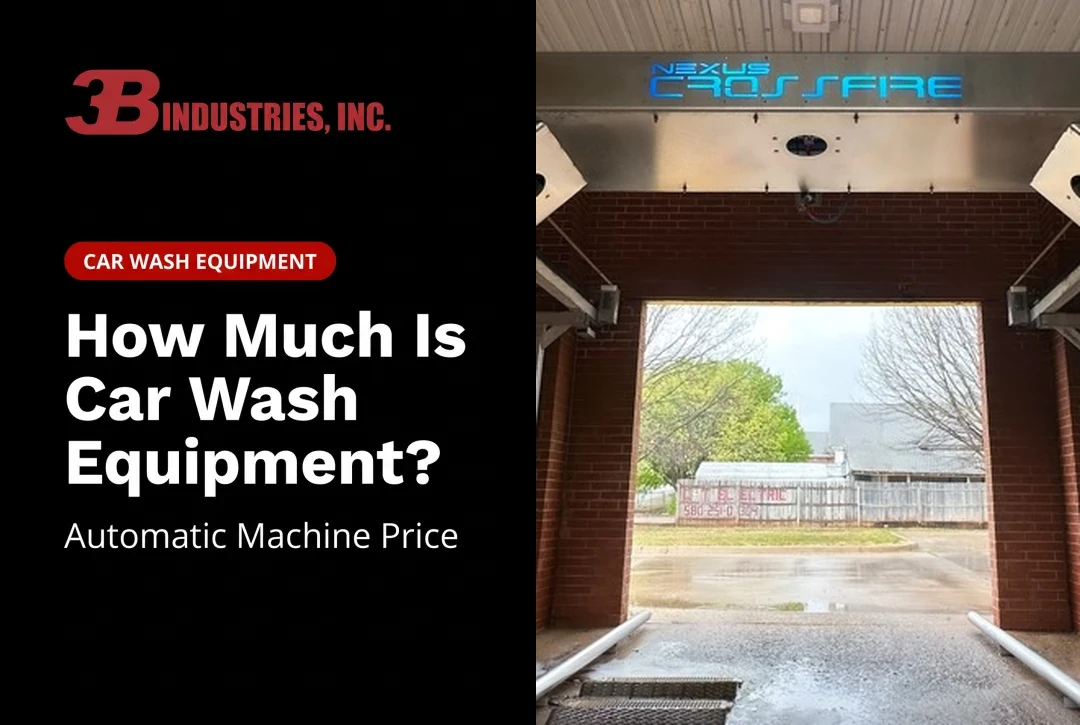
Equipment sizing needs to match vehicle dimensions and throughput goals. 3B Industries' Crossfire is one example designed around that requirement.
It's a touchless in-bay automatic system with a patented oscillating spray head that washes both sides of a vehicle at once, shortening cycles without added labor. Configurations like the Crossfire XL extend bridge clearance for larger vehicles, buses, and RVs. Always verify current specs and configuration options with the manufacturer before purchasing.
Interior and Detailing Equipment
Facilities offering interior service typically need:
- Wet/dry vacuums or central vacuum systems
- Upholstery extractors
- Air compressors or blowers
- Glass-cleaning tools and microfiber towels
- Detailing brushes, polishers, and wax or protectant applicators
Business and Customer-Facing Equipment
This category gets overlooked on basic lists, but it's essential for daily operations:
- Payment terminals or pay stations
- Signage and lighting
- Equipment storage and tool racks
- Hose reels or booms
- Chemical dispensers
- A stocked inventory of replacement nozzles, hoses, seals, filters, and fittings
3B's Omni II self-service system, for example, supports coin, token, bill, and credit card configurations.
Running out of a $12 seal shouldn't shut down a $40,000 wash bay. Keep spare parts on hand.
Water, Chemicals, and Environmental Systems
Water quality and wastewater handling need to be planned before equipment arrives, not after. They affect wash results, chemical performance, equipment lifespan, utility costs, and regulatory compliance all at once.
Water use also varies significantly by model. Per the EPA's WaterSense at Work report, average use runs about:
- Self-service: 15.0 gallons per vehicle
- In-bay automatic: 43.3 to 44.8 gallons per vehicle
- Tunnel/conveyor: around 34 gallons per vehicle
Water Delivery and Treatment
Core components include:
- Storage tanks, pumps, and fixed or hose-fed lines
- Sediment and carbon filtration
- Reverse osmosis (RO) or deionization systems
- Spot-free rinse equipment
RO systems can remove 96% to 99% of total dissolved solids, which matters for spot-free final rinses and wax stages. Professional systems generally run 900 to 1,200 PSI, and some self-service units reach 1,500 PSI. Before you buy, compare flow rate, pressure, capacity, and maintenance needs against your expected vehicle throughput.

Reclaim and Wastewater Handling
Reclaim setups typically include:
- Reclaim tanks and settling or separation stages
- Filtration, reclaim pumps, and oil/sediment drains
Mobile operators may need containment mats or portable recovery systems where fixed drainage isn't available.
Chemical Categories
Commercial car wash chemistry generally falls into these groups:
- Presoaks (high- and low-pH)
- Detergents, soaps, and foam products
- Wheel and tire cleaners
- Drying agents
- Waxes, sealants, and protectants
Chemical compatibility matters as much as cleaning power. Formulas need to work with your specific pumps, hoses, brushes, and tanks. Suppliers like 3B Industries, which has blended proprietary liquid and powder formulas since 1960, design chemistry to pair with matching wash equipment—worth confirming when you source both from one manufacturer.
Verify your local requirements before you finalize equipment and chemistry. Rules vary by state and municipality for:
- Wastewater discharge and stormwater protection
- Chemical storage and spill response
- Water conservation limits
Don't assume one jurisdiction's standard applies everywhere.
Operations, Safety, and Maintenance Equipment
Treat safety equipment as required infrastructure at any wash facility with moving machinery, pressurized water, and chemical handling.
Safety Equipment Checklist
- Emergency shutoff switches
- Lockout/tagout (LOTO) supplies
- Protective eyewear and gloves
- Chemical labels and safety data sheets (SDS)
- First-aid supplies
- Slip-resistant flooring and warning signs
- Machine guards and adequate lighting
OSHA's lockout/tagout standard requires an energy-control program with written procedures, employee training, and inspections conducted at least annually. This applies directly to conveyor and pump maintenance, where unexpected startup could cause injury.
Routine Maintenance Tools
Keep these on hand for daily and weekly upkeep:
- Pressure washers for bay cleaning
- Air compressors and grease guns
- Floor scrubbers and wet/dry vacuums
- Oil or fluid extraction tools
- Hand tools and electrical testing equipment
- Spare wear parts (brushes, nozzles, belts, seals)
A preventive maintenance program covering pumps, motors, conveyors, brushes, dryers, dosing systems, filters, hoses, and sensors keeps small issues from becoming expensive shutdowns.
Log service dates and follow manufacturer-specified intervals rather than waiting for something to break.
How to Choose, Install, and Budget for Equipment
Buying car wash equipment without a written plan almost always leads to overspending or under-provisioning. Start with a schedule, not a shopping cart.
Build an Equipment Schedule
Separate your list into three categories:
- Must-have — equipment your model can't operate without
- Optional — upgrades that improve throughput or customer experience
- Future upgrade — items to add once revenue supports expansion
Match every item to your projected vehicle volume, vehicle types, wash method, site footprint, staffing plan, and utility capacity.
Compare Total Cost of Ownership
Purchase price is only one line item. Also budget for:
- Installation, concrete, and drainage work
- Plumbing and electrical service upgrades
- Water treatment and chemical consumption
- Labor, maintenance, and replacement parts
- Operator training and expected downtime
Evaluate Vendors Carefully
Before signing anything, check:
- Construction quality and material durability (stainless steel components typically outlast mild steel in wet environments)
- Warranty terms and parts availability
- Technical support and installation services
- Documented references from existing operators
3B Industries fabricates its Crossfire and Omni II systems in-house in the USA and pairs them with proprietary chemicals, installation, and engineering support. If you prefer one integrated supplier over multiple vendors, request a configuration built around your site and operating model before you commit.
Pre-Installation Checklist
Confirm these before equipment arrives:
- Water pressure and flow capacity
- Electrical service capacity
- Ventilation and drainage
- Reclaim space and chemical storage
- Vehicle circulation and bay dimensions
- Local permits and environmental approvals
Before you lock the budget, also research:
- Financing options and current lead times
- Used-equipment risks versus new
- Energy and water efficiency ratings
Equipment lifespans vary by component and maintenance history—budget replacements by part, not by one average number.
Conclusion
There's no single best car wash equipment list—only the one that fits your operation.
Match gear to your business model, site, wash method, expected volume, and maintenance capacity.
Before you buy:
- Define your operating model
- Map the full wash workflow
- Split must-have vs. optional equipment
- Confirm utilities and site constraints with qualified installers
A clear plan beats a generic shopping list. If you want a second set of eyes on equipment fit and installation, 3B Industries can help you align the list with your site and wash type.
Frequently Asked Questions
What equipment do I need to start a car wash business?
Hand wash or mobile operations need portable tools like pressure washers, vacuums, and basic chemicals. Self-service, in-bay automatic, or tunnel sites need pumps, water systems, automation controls, payment equipment, and fixed bay or tunnel infrastructure.
What are the main equipment categories for a commercial car wash?
Most commercial sites need wash/rinse equipment, dryers, water treatment or reclaim, chemical delivery, wastewater handling, vacuums, payment systems, safety gear, and maintenance spares. Scale each category to self-service, in-bay, or tunnel volume.
What equipment do professional car detailers use?
Detailers typically use pressure washers, foam applicators, vacuums, extractors, and air compressors or blowers. Finishing work adds microfiber towels, brushes, polishers, water filtration, and professional-grade chemicals.
Which car wash machine is the best?
No single machine wins every site. Pick based on wash method, bay or tunnel layout, vehicle mix, automation level, budget, and local maintenance support.
Is a car washing business profitable?
Profitability depends on location, pricing, utilization, labor and utility costs, chemical and maintenance expenses, and equipment uptime. Model your own site’s numbers before you buy—don’t lean on industry averages.